





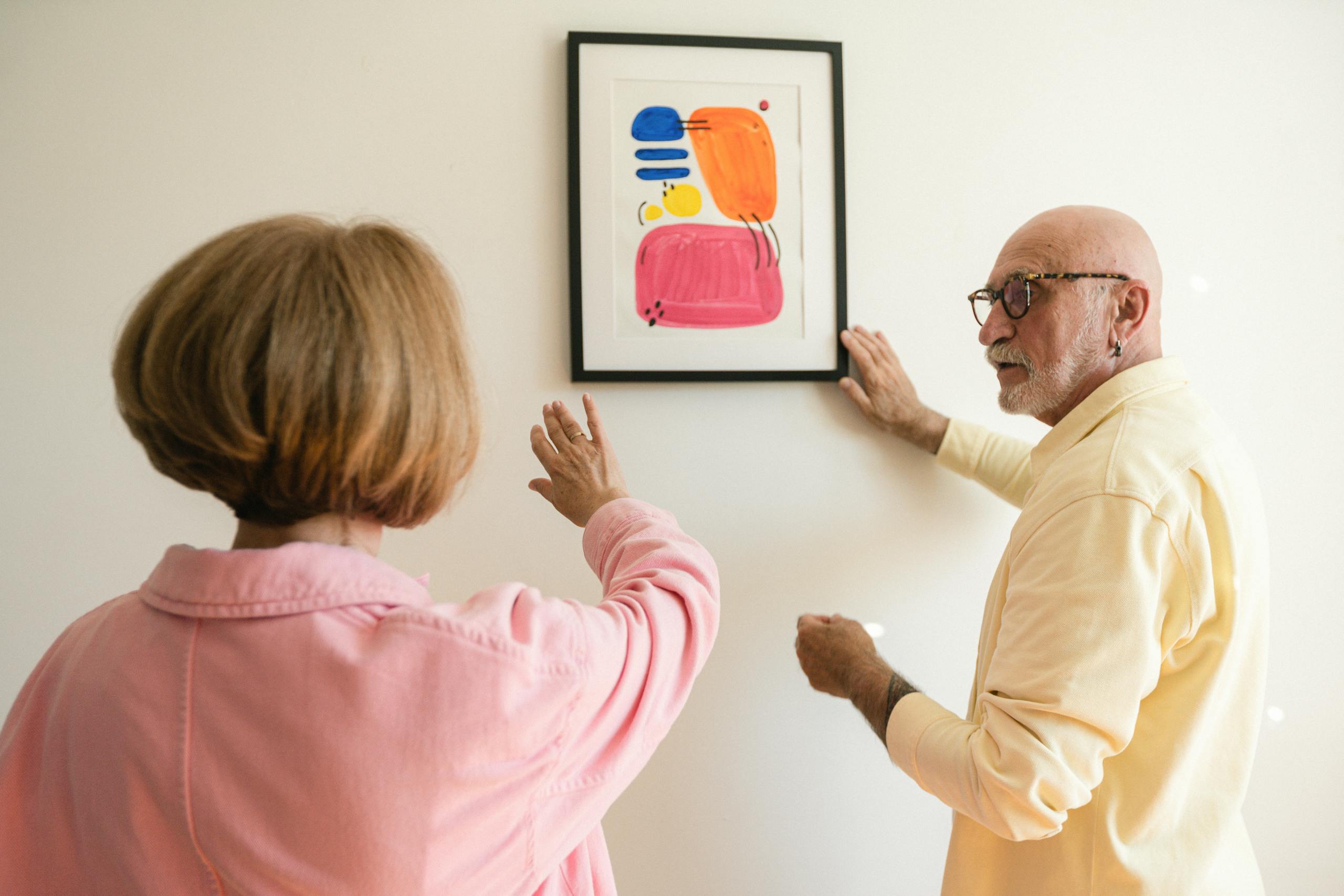
Arts and Culture for Seniors: Your Complete Guide to a Richer, More Creative Life
There is a particular kind of freedom that arrives in later life. The calendar clears, the demands soften, and for the first time in decades, there is space — real, unhurried space — to ask: What do I actually love? For millions of older adults, the answer involves art, music, theater, literature, dance, and culture in all its forms.
This is not a coincidence. The arts have always been drawn to experience, and experience is exactly what seasoned adults bring in abundance. Whether you are picking up a paintbrush for the first time at 68, finally joining that book club you kept putting off, or traveling to Florence to stand before Michelangelo’s David, the arts offer something that grows more valuable with age: depth.
This guide is your comprehensive introduction to arts and culture in later life — why it matters, how to engage with it, what the research says, and the many doorways through which you can step in.
Why Arts and Culture Matter More Than Ever in Later Life
The Science of Creative Aging
The evidence is both striking and consistent. A landmark study by the National Endowment for the Arts and George Washington University found that older adults who participated in arts programs reported better health, fewer doctor visits, less medication use, and higher morale than their peers. The participants were more socially active, less lonely, and showed stronger cognitive performance over time.
These findings align with decades of neuroscience research confirming that creative activity — whether making art, listening to music, writing, or attending performances — activates multiple regions of the brain simultaneously. It builds and reinforces neural pathways, supporting the kind of cognitive flexibility that protects against decline.
Dr. Gene Cohen, a pioneering researcher in the field of creative aging, described a phenomenon he called the “liberation phase” — a surge in creative energy that many people experience in their 60s and 70s, once the pressures of career and family rearing ease. Far from being a time of creative decline, later life can be a period of remarkable artistic flourishing.
Connection, Purpose, and Joy
Beyond the cognitive benefits, the arts address something more fundamental: the human need for meaning and connection. Arts programs for older adults consistently show reductions in loneliness and depression, two of the most significant health challenges facing the aging population.
There is also the simple, irreplaceable matter of joy. Not every reason to engage with the arts needs to be therapeutic or measurable. Sometimes you go to the theater because it is thrilling. You learn watercolor because the colors please you. You join a choir because the sound of many voices together makes you feel alive. These are reason enough.
The Many Faces of Arts and Culture
Arts and culture is not a single lane — it is a wide, sprawling landscape with room for every temperament, budget, physical ability, and interest.
Visual Arts: Making and Viewing
The visual arts encompass everything from painting, drawing, and sculpture to ceramics, printmaking, photography, and textile arts. For older adults, this domain offers two distinct but equally rewarding modes of engagement: creating and witnessing.
Creating visual art — whether you have done it before or are beginning at 70 — is one of the most studied forms of creative aging. It requires focus, problem-solving, fine motor engagement, and sustained attention. It also offers the quiet satisfaction of making something that did not exist before. Beginners are welcome everywhere: community art centers, senior centers, online platforms, and private studios all cater to adult learners.
Visiting museums and galleries offers its own rich experience. Major museums in cities across the country now offer dedicated programs for older adults, including tours designed for those with hearing or vision challenges, dementia-friendly programs, and members-only morning hours that allow for unhurried viewing. Many offer free or reduced admission to seniors.
Performing Arts: Theater, Music, and Dance
The performing arts — live theater, opera, symphony concerts, chamber music, ballet, modern dance, folk dance — represent some of the most powerful shared cultural experiences available. There is something irreplaceable about sitting in a darkened theater as the curtain rises, or feeling the resonance of a full orchestra in your chest.
For older adults, the performing arts offer both the role of audience member and participant. Community theater groups actively recruit seniors. Choirs welcome voices of all experience levels. Dance studios offer ballroom, line dancing, folk, and seated movement classes tailored to older bodies. The performing arts community is, in many ways, already a multigenerational one.
Literary Arts: Reading, Writing, and Storytelling
Books, poetry, memoir, oral history, and creative writing form a category all their own. The literary arts are perhaps the most accessible of all: they require no special equipment, no travel, and can be practiced anywhere.
Book clubs have become one of the most popular social activities among adults over 60 — and for good reason. They combine intellectual engagement with social connection, giving structure to both reading and conversation. Many public libraries now offer senior-specific book clubs, large-print reading groups, and author talks.
For those drawn to writing, memoir and personal essay offer a uniquely meaningful form. The impulse to record one’s experience, to make sense of a life, is both a creative act and a form of legacy-building. Writing classes for older adults are widely available, from community colleges to senior centers to online platforms like Coursera.
Cultural Heritage and Travel
Arts and culture extend beyond the studio and the stage into the world itself — into historic sites, cultural districts, ethnographic museums, festivals, and the living traditions of communities around the globe.
Cultural travel — visiting significant art cities, attending international festivals, exploring historical sites — is one of the fastest-growing segments of senior travel. Organizations like Road Scholar (formerly Elderhostel) offer hundreds of arts- and culture-focused travel programs designed specifically for older adults.
Even without travel, cultural heritage can be explored locally. Many cities have active arts districts, annual cultural festivals, and ethnic neighborhoods rich with food, music, art, and story.
Getting Started: Finding Your Artistic Entry Point
One of the most common barriers to arts engagement in later life is not disability or cost — it is uncertainty. Where do I start? Am I too old to learn? Will I be good enough?
The answers: anywhere, no, and it does not matter.
If You Are Drawn to Making Things
Start with a class. A single introductory session at a local art center, senior center, or community college will quickly show you whether a medium resonates. Watercolor, pottery, drawing, and photography are among the most popular starting points for older adult learners because they are forgiving mediums that reward observation and patience — qualities that come with age.
You can also start at home. YouTube is a remarkable resource: free, high-quality tutorials in virtually every artistic discipline are available 24 hours a day. Many older adults begin by watching and experimenting privately before joining a class.
If You Are Drawn to Performing
Look for community auditions, which are open to everyone regardless of experience. Community theater, community choirs, and community orchestras exist in almost every mid-sized city and town, and they actively need members. If you played an instrument decades ago, a local ensemble may welcome your return. If you love music but have never performed, a choir requires no prior training.
Dance is similarly accessible. Community dance classes for older adults are widely available in ballroom, square dancing, line dancing, and folk traditions. Many senior centers offer seated dance and rhythm movement classes for those with mobility concerns.
If You Are Drawn to Words
Walk into your local public library and ask about book clubs. Join one that reads in a genre you enjoy, or challenge yourself with one that pushes you into new territory. If writing calls to you, look for a memoir or creative writing workshop. Many are free or low-cost. The act of writing with others — sharing, responding, listening — is one of the most community-building of all creative experiences.
If You Are Drawn to Witnessing and Exploring
Subscribe to a local theater’s season. Purchase a museum membership. Follow a local arts organization on social media and attend their events. Make a list of five cultural experiences you have always wanted to have — an opera performance, a visit to a major art museum, a jazz festival — and begin working through it.
Accessibility and Inclusion in the Arts
The arts world has made significant strides in the past decade toward becoming more accessible to older adults and people with disabilities. If you have concerns about hearing loss, vision impairment, mobility challenges, or cognitive changes, know that accommodations are increasingly available and widely offered.
For hearing loss: Many theaters now offer hearing loop systems, audio descriptions, and open-captioned performances. Call ahead to ask what is available.
For vision impairment: Museums increasingly offer touch tours of sculpture and tactile reproductions of paintings, as well as audio-guided tours and large-print materials.
For mobility: Most major cultural venues are ADA-compliant, with accessible seating, elevators, and restrooms. Many offer wheelchair-accessible tours and programs.
For cognitive changes: Dementia-friendly museum programs, adapted theater experiences, and music programs designed for memory care residents are increasingly common. Organizations like TimeSlips and Arts for the Aging specialize in creative engagement for older adults with cognitive challenges.
Do not assume an arts experience is closed to you. Ask. The answer is often a warm yes.
The Social Dimension: Arts as Community
One of the most consistent findings in creative aging research is that arts engagement works best as a social activity. A painting class, a choir rehearsal, a book club meeting, a museum trip with friends — these experiences compound in value when shared.
This matters because social isolation is one of the most significant health risks facing older adults. The arts offer a natural antidote: shared purpose, regular gathering, collective creation. Choirs rehearse weekly. Theater groups meet for months during a production. Book clubs convene with the reliability of a standing appointment.
For those who have retired, moved to a new city, lost a spouse, or found their social circle shrinking, arts communities can be a genuinely life-changing source of belonging.
Resources for Getting Involved
- National Center for Creative Aging (NCCA): A leading organization dedicated to fostering the relationship between creative expression and healthy aging.
- Arts for the Aging: Provides arts programming in the greater Washington, D.C. area and advocates nationally.
- Road Scholar: Offers educational travel programs, many focused on arts, history, and culture.
- VolunteerMatch: Connects older adults with volunteer opportunities at arts and cultural organizations.
- AARP: Maintains a regular calendar of arts and cultural programs, discounts, and events for members.
- Your local public library and senior center: Often the most accessible starting point for any arts engagement.
A Final Word
There is no age at which the arts stop welcoming you. The great museums do not check your birth year at the door. The community theater does not require a résumé. The choir does not ask when you last sang. The writing workshop does not grade you on your past.
What arts and culture ask for is presence — a willingness to show up, pay attention, and let yourself be moved. These are things that seasoned adults, having accumulated a lifetime of experience, are uniquely equipped to offer.
The curtain is up. Step in.
[…] Arts and Culture for Seniors: Your Complete Guide to a Richer, More Creative Life […]
[…] Arts and Culture for Seniors: Your Complete Guide to a Richer, More Creative Life […]
[…] Arts and Culture for Seniors: Your Complete Guide to a Richer, More Creative Life […]
[…] Arts and Culture for Seniors: Your Complete Guide to a Richer, More Creative Life […]
[…] Arts and Culture for Seniors: Your Complete Guide to a Richer, More Creative Life […]
[…] Arts and Culture for Seniors: Your Complete Guide to a Richer, More Creative Life […]