





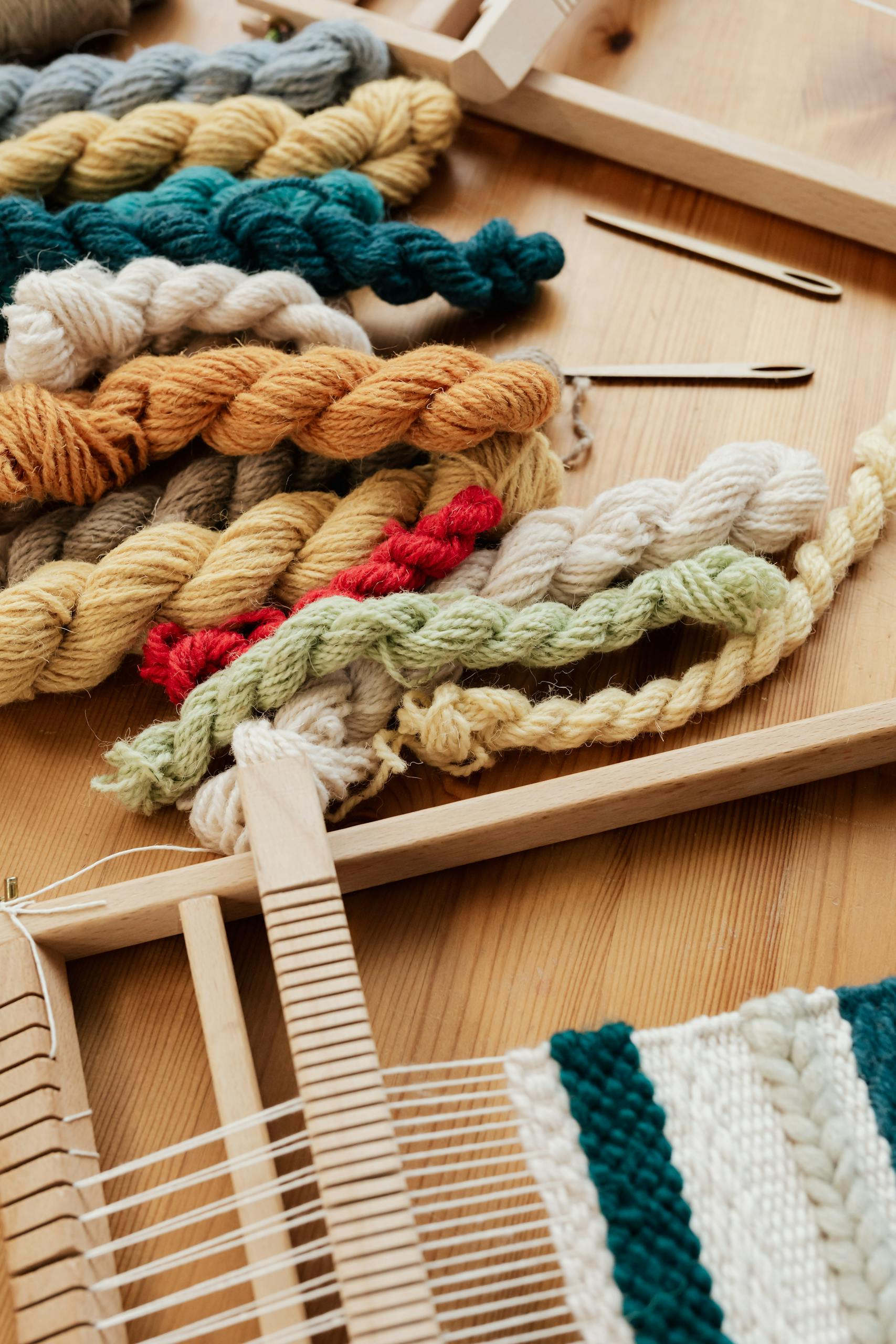
Knitting, Weaving, and Textile Arts: The Craft Having a Major Renaissance
Textile arts have a complicated cultural reputation. For decades they were associated with grandmothers in rocking chairs — a gentle, domestic pastime respected but not taken seriously as an art form. Then something shifted. Contemporary fiber artists began exhibiting in major galleries. Knitting collectives formed around social justice causes. The slow textiles movement emerged in response to fast fashion. A new generation of weavers, embroiderers, and quilters claimed their craft as fine art without apology.
Today, textile arts occupy a remarkable position: simultaneously the most ancient of craft traditions and one of the most vital contemporary art movements. And for older adults — whether coming to these crafts for the first time or returning to a practice set aside during busy decades — they offer an extraordinary combination of physical, cognitive, social, and creative rewards.
The Spectrum of Textile Arts
The textile arts family is broad enough to accommodate virtually every creative temperament, physical ability, and interest level.
Knitting and crocheting are among the most accessible entry points: inexpensive to begin, portable, immediately productive (a first project can be completed in a few sessions), and richly social. Yarn shops typically host regular knit nights open to all skill levels. Online platforms like Ravelry provide access to hundreds of thousands of free and low-cost patterns. The meditative quality of repetitive stitch-making — the click of needles, the rhythm of the yarn — is a form of moving meditation with well-documented anxiety-reducing effects.
Weaving ranges from the utterly simple (a small frame loom, a few skeins of yarn, and a few hours) to the extraordinarily complex (floor looms with hundreds of individual heddles, drafts requiring advanced mathematical planning). Tapestry weaving — the tradition that produced the Bayeux Tapestry and the great medieval Flemish tapestries — is experiencing a particular contemporary revival, with contemporary artists using it to explore narrative, abstraction, and portraiture at museum scale.
Quilting is both a fine art and a community tradition of remarkable depth. American quilt-making has its roots in necessity and community — the barn raising, the church group, the bee where women gathered to work together. Contemporary quilting extends from traditional patterns (log cabin, flying geese, cathedral windows) to abstract piecing that rivals contemporary painting in its compositional ambition. The improvisational quilting tradition of Gee’s Bend, Alabama — recognized in major museum exhibitions as a significant contribution to American art — demonstrates what is possible when quilting is treated as a fully expressive art form.
Embroidery and needlepoint offer finely detailed, portable work that can be taken up for 20 minutes or four hours. Contemporary embroidery has moved well beyond the crewelwork and cross-stitch of earlier generations: artists like Cayce Zavaglia create photorealistic portrait embroideries; the Royal School of Needlework in London trains embroiderers in techniques that are centuries old and still vital. For those with fine motor skill and patience for detailed work, embroidery is inexhaustibly rich.
Dyeing and surface design — including natural dyeing with plants and minerals, shibori (a Japanese resist-dyeing technique), and screen printing on fabric — add the dimension of color and pattern to fiber work. These practices connect textile art to chemistry, botany, and history in ways that surprise and delight their practitioners.
The Research on Textile Arts and Older Adults
The cognitive benefits of textile arts for older adults are increasingly well-documented. A Mayo Clinic study found that older adults who engaged in crafts including knitting and quilting showed significantly lower rates of mild cognitive impairment than those who did not. The combination of fine motor engagement, pattern recognition, mathematical reasoning (counting stitches, calculating yardage), spatial reasoning (visualizing how flat pieces will become three-dimensional objects), and sustained attention is a genuinely demanding cognitive workout that many older adults find highly enjoyable.
The social benefits are equally significant. Knitting groups, quilting guilds, and weaving circles have been social institutions for centuries — and they remain so. A weekly stitch-and-chat group at a yarn shop or senior center is, for many older adults, among their most valued social commitments. The combination of purposeful activity with unstructured conversation produces a quality of connection that differs from both pure social events and pure activities.
Getting Started
The easiest entry point is a local yarn shop, which typically offers beginner knitting or crocheting classes and hosts regular community knitting sessions. Quilting guilds exist in most communities and welcome beginners; find yours through the American Quilter’s Society or a local fabric shop. Weaving guilds similarly offer community, classes, and equipment access. Online communities on Ravelry (for knitters and crocheters) and Instagram (for every fiber art imaginable) provide inspiration, pattern resources, and connection with a global community of textile artists.
Start small and project-oriented: a knitted dishcloth, a simple woven wall hanging, a small embroidered hoop. The first finished object — even an imperfect one — produces a satisfaction that propels the practice forward. And the tradition you are joining is one of the longest and richest in human culture: people have been making textiles for at least 30,000 years. You are, in picking up a needle or a shuttle or a pair of knitting needles, connecting yourself to all of them.
Related Articles
- Pottery and Ceramics for Older Adults: Finding Your Hands in Clay
- Classical Music and Opera: A Practical Guide for New and Returning Listeners
- Arts and Culture for Seniors: Your Complete Guide to a Richer, More Creative Life
- Book Clubs for Seniors: How to Find One, Start One, and Get the Most Out of It