



Arts & Culture After 50: Your Complete Guide to a Richer, More Meaningful Cultural Life
There is a version of cultural life that most people have access to in theory and almost no one builds in practice: a life genuinely organized around art, music, literature, performance, architecture, and the creative traditions of the places you inhabit and visit. Not a life of occasional museum visits and annual concerts, but a life in which the arts are a genuine organizing principle — a source of meaning, community, intellectual stimulation, and the kind of beauty that sustains people through difficulty and gives ordinary time a texture that purely productive activity doesn’t provide.
The years after 50 are the moment when this life becomes most accessible. Career demands have typically reduced or become more flexible. Children, if there were any, are no longer the organizing center of the household schedule. The financial and experiential capital to pursue serious cultural engagement — memberships, travel, collections, classes, performances — is often at its highest. And the accumulated life experience that makes deep engagement with art, history, and culture genuinely rewarding — the ability to recognize what resonates and why, the patience for complexity, the desire for meaning over novelty — is fully developed in ways it wasn’t at 30.
This guide is a starting point: an orientation to the major domains of cultural life, the practical steps that open each one up, and the philosophy of engagement that turns occasional cultural consumption into a rich, sustaining dimension of how you live.
Why the Arts Matter More After 50
The research on arts engagement and wellbeing in later life is consistently positive across multiple dimensions. Regular engagement with the arts — whether as an audience member, a practitioner, or a collector — is associated with higher life satisfaction, better cognitive function, stronger social connection, and greater resilience in the face of the losses and changes that later life inevitably brings. These are not trivial findings. They reflect something real about what the arts provide that other activities don’t.
Art — in its broadest sense, encompassing visual art, music, literature, theater, architecture, and craft — is the accumulated record of how human beings have tried to make sense of their experience. It is the repository of the insights, beauties, griefs, and joys that couldn’t be fully expressed in any other form. Engaging deeply with this record — not as a tourist passing through, but as someone who brings their own experience and asks genuine questions — produces a kind of dialogue across time and culture that is among the most intellectually and emotionally rewarding activities available to any person at any age.
After 50, this engagement deepens in specific ways. The person who stands before Rembrandt’s late self-portraits at 58 brings something to the encounter that they couldn’t have brought at 28 — the experience of aging, loss, the particular relationship with one’s own face that comes from having inhabited it for decades. The person who reads Tolstoy’s later works after experiencing significant life transitions encounters something that the same person in their 20s could only approach from the outside. Depth of engagement with art is partly a function of the depth of life that the viewer brings to it, which makes later life one of the richest periods available for cultural engagement.
The Major Domains: An Overview
Cultural life encompasses several distinct domains, each with its own infrastructure, practices, and entry points. Most people who build rich cultural lives do so by developing genuine depth in two or three of these domains while maintaining broader familiarity with others — rather than trying to engage equally with everything or limiting themselves to a single area.
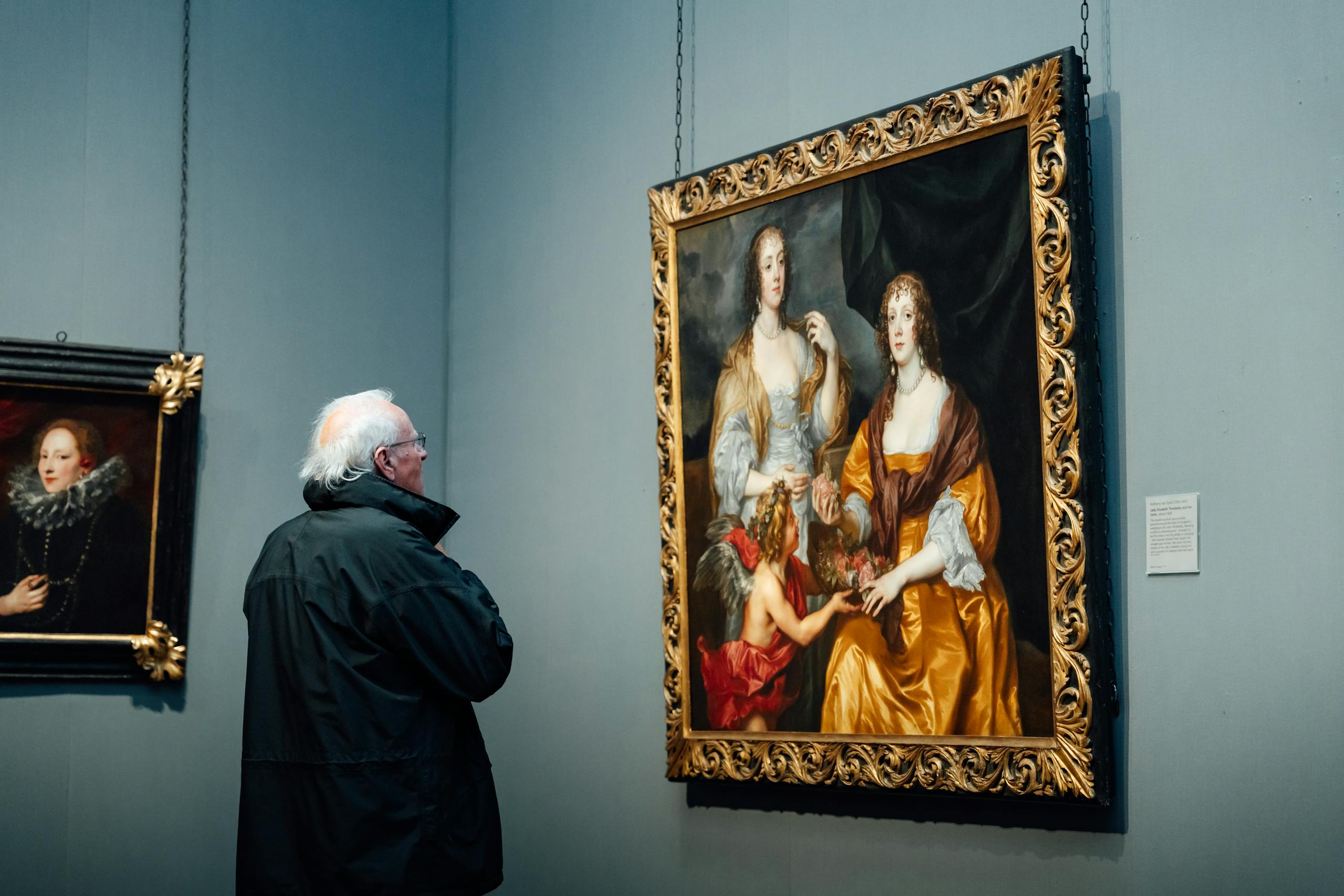
The visual arts — painting, sculpture, photography, printmaking, and the entire spectrum of two- and three-dimensional visual creation — are anchored by museums and galleries but extend into studios, art fairs, auction houses, and private collections. The entry point for most people is the museum visit; the progression is from passive viewing toward active looking, collecting, collecting relationships with living artists, and participation in the broader art community.
Music — classical, jazz, opera, folk, and the full spectrum of performance traditions — is available at virtually every level, from community orchestra concerts to the world’s great concert halls and opera houses. Developing a relationship with music as a listener is one of the most rewarding investments in cultural life available, and the barriers to entry are lower than most people assume. You don’t need technical knowledge to love a Beethoven symphony or a Miles Davis album; what you need is sustained, attentive listening that lets the music develop meaning over time.
Literature and storytelling — novels, essays, memoirs, poetry, and the written tradition in all its forms — is the most accessible cultural domain because it requires nothing but time, a library card, and the willingness to follow where good writing leads. Developing a reading practice that goes beyond bestseller lists into the deeper tradition — the great works of world literature, the essayists and poets who have most fully articulated the human condition — produces rewards that compound over time in ways that few other investments in cultural life do.
Theater, opera, and live performance provide an experience that no recording or reproduction can replicate: the encounter with human beings creating something ephemeral, together, in real time, in the same room as the audience. The liveness of live performance is its irreducible quality, and developing a relationship with the performing arts — whether through regular theatergoing, opera subscriptions, or attendance at dance and live music — provides a kind of communal aesthetic experience that is increasingly rare in an age of individual, on-demand media consumption.
Architecture and design — the built environment in its full range, from great historic monuments to neighborhood vernacular buildings — is the cultural domain that surrounds everyone always but is actively perceived by very few. Learning to read buildings — to understand what they’re doing structurally, what they’re expressing aesthetically, what they reveal about the culture and period that produced them — transforms the experience of every city visited and every neighborhood inhabited.
Creative practice — making something yourself, in whatever medium — is qualitatively different from audience engagement and provides dimensions of the cultural life that passive consumption alone cannot. Writing, painting, photography, ceramics, music-making, textile work: the decision to make things, at whatever level of skill, produces a relationship with art and craft that fundamentally changes how you experience other people’s work and what you understand about your own inner life.
Building a Cultural Life: The Practical Architecture
A cultural life is built the way any meaningful life dimension is built: through deliberate structure, regular practice, and the investment of actual time and money in activities that matter. The museum membership that makes regular visits frictionless. The concert subscription that puts performances on the calendar months in advance. The book group that creates accountability and community around reading. The art class that builds skill while providing regular creative engagement. These are not luxuries — they are the practical infrastructure of a dimension of life that enriches everything else.
Community is a multiplying factor in cultural engagement. Most of the deepest satisfactions of cultural life — the conversation after a performance about what it meant, the shared excitement of discovering a new artist, the book club discussion that reveals dimensions of a novel that solo reading missed — are social experiences. Building cultural community is worth as much effort as building the personal practice itself.
Cultural Travel as a Life Organizing Principle
Travel organized around cultural rather than purely touristic goals produces a qualitatively different travel experience. The trip to Florence that centers on a serious engagement with the Renaissance — knowing the history, understanding the relationships between the artists, visiting the works in a sequence that tells the story — is a different experience from Florence as a checklist of sites to photograph. Cultural travel requires preparation — reading before you go, planning the experience to create coherence rather than coverage — and that preparation multiplies the value of time spent enormously.
The great repositories of human cultural achievement — the Louvre, the Uffizi, the Prado, the British Museum, the Met — reward multiple serious visits over a lifetime far more than a single comprehensive tour. Building relationships with specific collections and returning to them over years, watching how your perception of familiar works changes as your life and knowledge develop, is one of the most quietly profound ways that cultural engagement rewards sustained attention.
Starting Where You Are
The most common barrier to building a rich cultural life is the feeling of coming to it late — the sense that not having built this relationship earlier means it’s too late to build it now, or that not having formal training or background knowledge means the domain is somehow not for you. Both of these beliefs are false. The arts are democratic in the deepest sense: they are available to anyone who chooses to engage with them, expertise is built through experience rather than required in advance, and the encounter between an attentive person and a genuine work of art or music or literature is available to everyone equally.
You start where you are, with what you’re drawn to, and you follow the interest wherever it leads. That is all it takes — and everything that follows from it is one of the great available pleasures of a fully lived human life.
What the Cluster Articles Cover
The articles that accompany this guide go deeper into each major domain of cultural life: how to get more from museum visits, how to approach classical music and live performance as a new listener, how to start collecting art at any budget level, how to build a creative writing or memoir practice, how to use travel as a vehicle for deep cultural immersion, how to learn to read architecture, and how photography can serve as both a creative practice and a way of engaging more attentively with every place you go. Each article is a practical guide to opening up one dimension of the cultural life that this overview maps.
Related Articles
- Building a Freelance Consulting Practice While Living Abroad After 50
- Arts and Culture for Seniors: Your Complete Guide to a Richer, More Creative Life
- Building Your Cultural Community: How to Find Your People in the Arts After 50
- Cultural Travel for Seniors: Planning Arts-Focused Trips That Go Beyond Tourism