





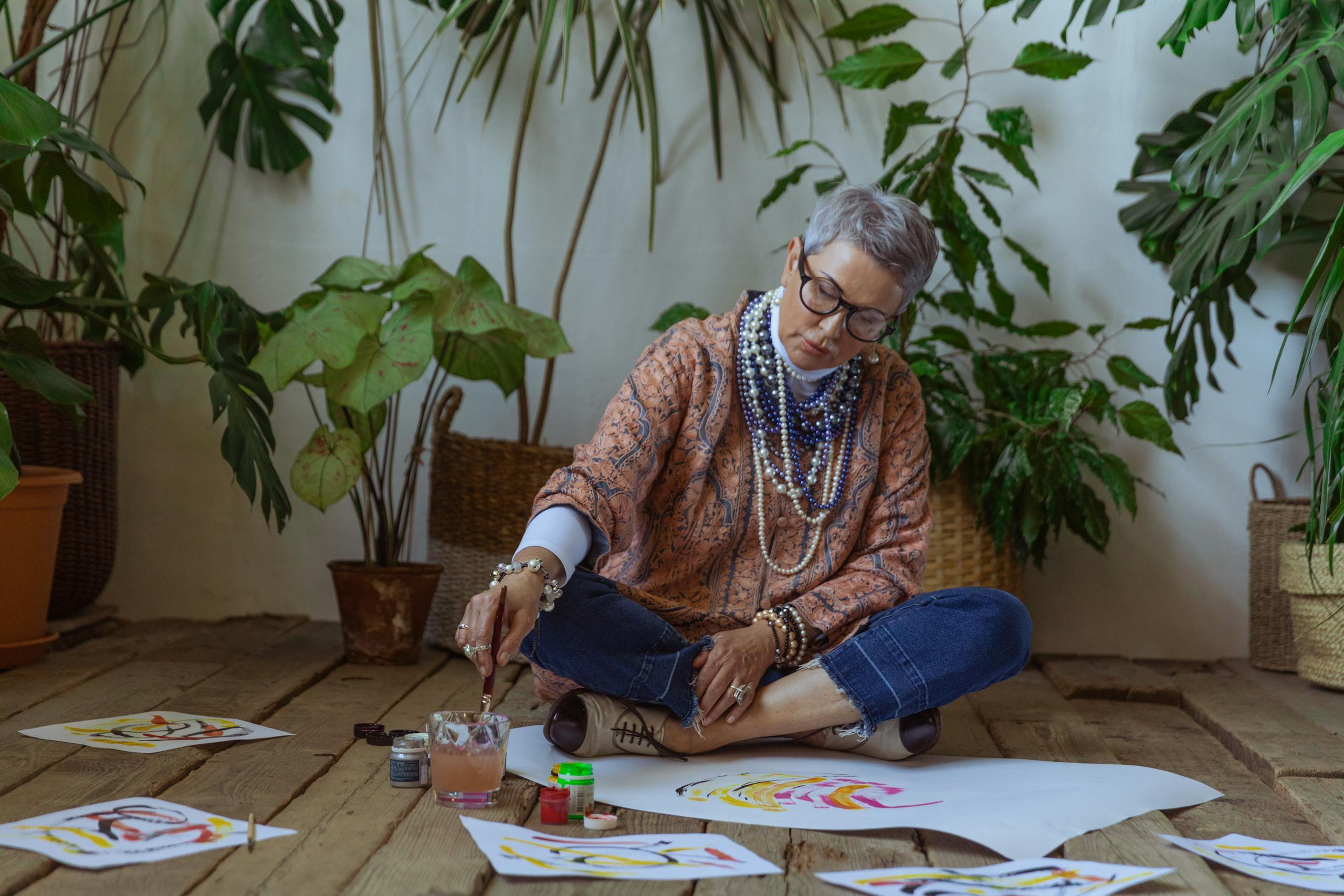
Art Therapy for Older Adults: When Creativity Is Also Healing
There is a distinction worth drawing clearly at the outset: art therapy is not the same as doing art. Both are valuable. Both are worthwhile. But art therapy is a clinical discipline, practiced by trained and credentialed professionals, that uses the creative process as a therapeutic tool to address specific emotional, psychological, and in some cases physical health goals.
What Is Art Therapy?
Art therapy is a form of psychotherapy that uses visual art media — painting, drawing, collage, sculpture, mixed media — as the primary vehicle for therapeutic communication. It is practiced by licensed art therapists (ATR credentials, sometimes also LPC or LMFT) who have completed graduate-level training in both psychotherapy and visual art.
Crucially, art therapy does not require artistic skill or prior experience. The goal is not to produce good art. The goal is to use the process of making — and the images that emerge from it — to access emotional material that may be difficult to reach through talk alone. Art therapy is particularly effective for grief and loss, depression and anxiety, trauma, chronic illness and pain management, life transitions (including the transitions of aging), dementia and cognitive decline, and end-of-life concerns.
Art Therapy and Older Adults: What the Research Shows
Dementia: Art therapy is one of the most evidence-supported non-pharmacological interventions for people living with dementia. Multiple studies have found that regular art therapy sessions reduce behavioral and psychological symptoms including agitation, anxiety, and depression, while improving quality of life and social engagement. Importantly, creative capacity often remains accessible well into the disease process, even as other cognitive functions decline.
Depression and anxiety: A 2016 systematic review in the Journal of Affective Disorders found significant reductions in depression and anxiety among older adults participating in art therapy. The benefits appear comparable to those of other psychotherapeutic interventions and are sustained over time with regular participation.
Grief and bereavement: Art therapy has shown particular effectiveness in supporting older adults navigating grief. The ability to express and externalize grief through imagery — rather than trying to articulate it verbally — can facilitate mourning processes that might otherwise become stuck.
Finding an Art Therapist
Art therapists work in a variety of settings relevant to older adults:
- Hospitals and medical centers: Many hospitals, particularly those with integrative medicine programs or palliative care services, employ art therapists. Ask whether the hospital offers art therapy services.
- Senior living communities: An increasing number of assisted living facilities, CCRCs, and memory care settings include art therapists on their staff or contract with art therapists for regular programming.
- Private practice: The American Art Therapy Association (AATA) maintains a therapist locator at arttherapy.org. Look for the credentials ATR (Art Therapist Registered) or ATR-BC (Board Certified).
- Hospice programs: Art therapy is widely used in hospice and palliative care settings, supporting both patients and family members.
- Community mental health centers: Sliding-scale art therapy services are sometimes available through community mental health organizations.
Art Therapy vs. Art for Wellbeing
Not every use of art as a healing practice requires a licensed therapist. A broad spectrum of creative programs exist that draw on therapeutic principles without being formal clinical art therapy — often described as “expressive arts,” “therapeutic art,” or “art for wellness.”
The appropriate choice depends on your needs. If you are managing a significant mental health condition, processing complex trauma, or supporting someone with dementia or a serious illness, formal art therapy with a credentialed professional is the appropriate resource. If you are navigating ordinary life transitions, grief, loneliness, or simply seeking the wellbeing benefits of creative expression, therapeutic art programs or art classes offer meaningful support.
The Power of Creative Expression in Later Life
There are experiences common in later life that are genuinely difficult to talk about. The death of close friends. The awareness of one’s own mortality. The losses — of physical capacity, of professional identity, of a spouse — that accumulate. Art gives these experiences a different kind of language. A painting does not require you to explain yourself. A piece of collage made from torn magazine images can hold contradictions — grief and gratitude, loss and love — that words tend to separate.
Many older adults who come to art therapy for the first time describe surprise at what emerges when they begin to make marks or construct images. Things that felt stuck begin to move. This is not magic. It is neuroscience: the visual, motor, and emotional systems engage simultaneously in art-making in ways that verbal processing does not.
Starting Points
If formal art therapy is appropriate for you, start with arttherapy.org to locate a credentialed practitioner in your area, or ask your primary care physician for a referral. If you are looking for therapeutic creative programs without the clinical framework, ask at your local senior center, hospital, or arts organization about expressive arts groups. Many are offered free or at very low cost.
Wherever you begin, the principle holds: creative expression is not a luxury. For many older adults, it is a form of medicine.