





Music and the Aging Brain: The Science and Joy of Musical Engagement in Later Life
Ask someone with advanced Alzheimer’s disease the name of the president, and they may not be able to answer. Play them a song from their wedding day, and watch their face change. Watch them sing every word.
This is not anecdotal. It is one of the most consistent and moving findings in neuroscience: music reaches parts of the brain that other forms of memory and cognition cannot. The neural pathways associated with familiar music are among the last to be affected by dementia. Music, in a very real sense, survives.
What Happens in the Brain When You Listen to Music
Music is one of the most complex stimuli the human brain processes. When you listen to a piece of music — even a simple melody — your brain is simultaneously processing pitch, rhythm, timbre, melody, harmony, and meaning. It is retrieving memories associated with the music. It is predicting what comes next. It is coordinating motor responses. It is responding emotionally.
Neurologist Oliver Sacks described music as “the most direct and non-pharmacological way to activate the brain.” For healthy older adults, regular music listening activates the prefrontal cortex, the hippocampus, and the cerebellum — regions involved in executive function, memory, and motor coordination. Regular engagement with music as an active listener appears to help maintain cognitive flexibility and processing speed.
Playing an Instrument: A Cognitive Workout
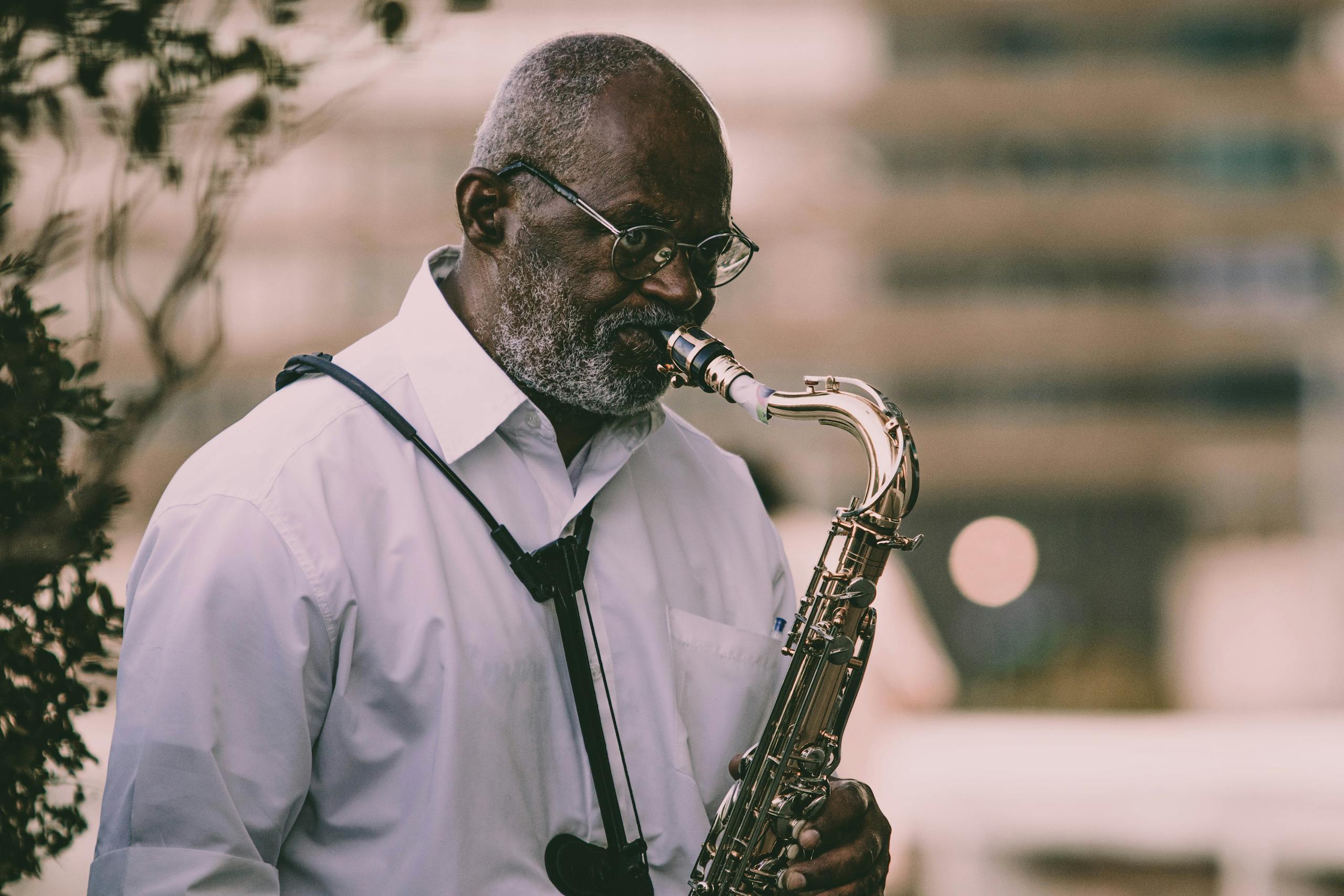
If listening to music is good for the brain, playing music is exceptional. Research at Northwestern University found that musicians show stronger cognitive performance on tests of auditory processing, working memory, and executive function compared to non-musicians — and these differences persist into old age. Older adults who play instruments also show lower rates of age-related hearing decline.
But what about starting in later life? Can you learn an instrument at 65, or 72, or 80? The answer — emphatically — is yes.
The most accessible instruments for adult beginners:
- Piano/keyboard: The visual layout of a keyboard makes it uniquely intuitive for beginners. Electronic keyboards are affordable, require no tuning, and allow you to play with headphones.
- Ukulele: A 4-string instrument with a gentle learning curve, warm sound, and enthusiastic community. Portable, affordable, and kind to arthritic fingers.
- Guitar: The most popular instrument in the world, with vast educational resources at every level. Fingerpicking styles can be easier on the joints and produce beautiful results relatively quickly.
- Recorder: An inexpensive, easy-to-start instrument with a rich historical repertoire that can produce lovely music in the hands of a dedicated player.
- Drums/percussion: Rhythm instruments engage the motor cortex and cerebellum in ways that have shown particular benefit for Parkinson’s disease patients and others with movement disorders.
Singing: The Most Accessible Musical Instrument
The voice is an instrument that everyone possesses. A 2012 study by Julene Johnson at the University of California, San Francisco found that community choral singing led to significant improvements in cognitive function, physical health, and emotional wellbeing among older adults. Participants in choir groups reported more social engagement, better sleep, and fewer falls than their peers.
Singing involves controlled breathing, which activates the parasympathetic nervous system and reduces cortisol levels. Singing in a group synchronizes heartbeats and breathing among participants — a literal physical entrainment that produces feelings of connection and calm.
Community choirs are among the most accessible performing ensembles. Most do not require an audition, particularly for community voices or gospel groups. Churches and synagogues maintain choral programs open to non-members. Senior centers offer group singing. The Sweet Adelines and Barbershop Harmony Society maintain chapters throughout the country.
Attending Live Music: Why Concerts Still Matter
In an era when any piece of recorded music is instantly available, the experience of live performance retains a unique power. A symphony orchestra at full volume fills the room with sound waves that recorded audio cannot replicate. A jazz ensemble improvising in real time produces music that has never existed before and will never exist again.
- Symphony orchestras: Most regional orchestras offer senior discounts, and many offer free or deeply discounted tickets for dress rehearsals. The pre-concert lecture, offered by many orchestras, is excellent programming on its own.
- Jazz venues: Many offer early shows (7 or 8 p.m.) that are easier logistically than late-night performances.
- Chamber music: Small ensemble concerts often take place in intimate venues with excellent acoustics and a more conversational atmosphere than large concert halls.
- Outdoor summer concerts: Many cities offer free summer concert series in parks and public spaces — often multigenerational, relaxed, and delightful.
Music for Specific Health Conditions
Parkinson’s disease: Rhythmic auditory stimulation (RAS) — walking to a musical beat — has shown remarkable results in improving gait, balance, and movement in Parkinson’s patients. Neurologic Music Therapy (NMT) is an established clinical discipline.
Dementia: Personalized playlists — music significant to the individual’s personal history — can reduce agitation, improve mood, and facilitate communication. The nonprofit organization Music & Memory trains caregivers and facilities in the use of personalized music.
Depression and anxiety: Listening to music, particularly music that evokes positive memories, reliably improves mood in the short term. Regular musical engagement is associated with lower rates of depression in older adults.
Chronic pain: Music listening has been shown in multiple studies to reduce the perception of pain by redirecting attention and modulating the emotional response to pain signals.
Starting Today
The beauty of musical engagement is that it requires no equipment, no class, and no previous experience to begin. You can start right now by putting on a piece of music you love and truly listening — not as background, but as the focus of your attention. Notice the structure. Notice where the melody surprises you. Notice what you feel.
That is the beginning of everything.