





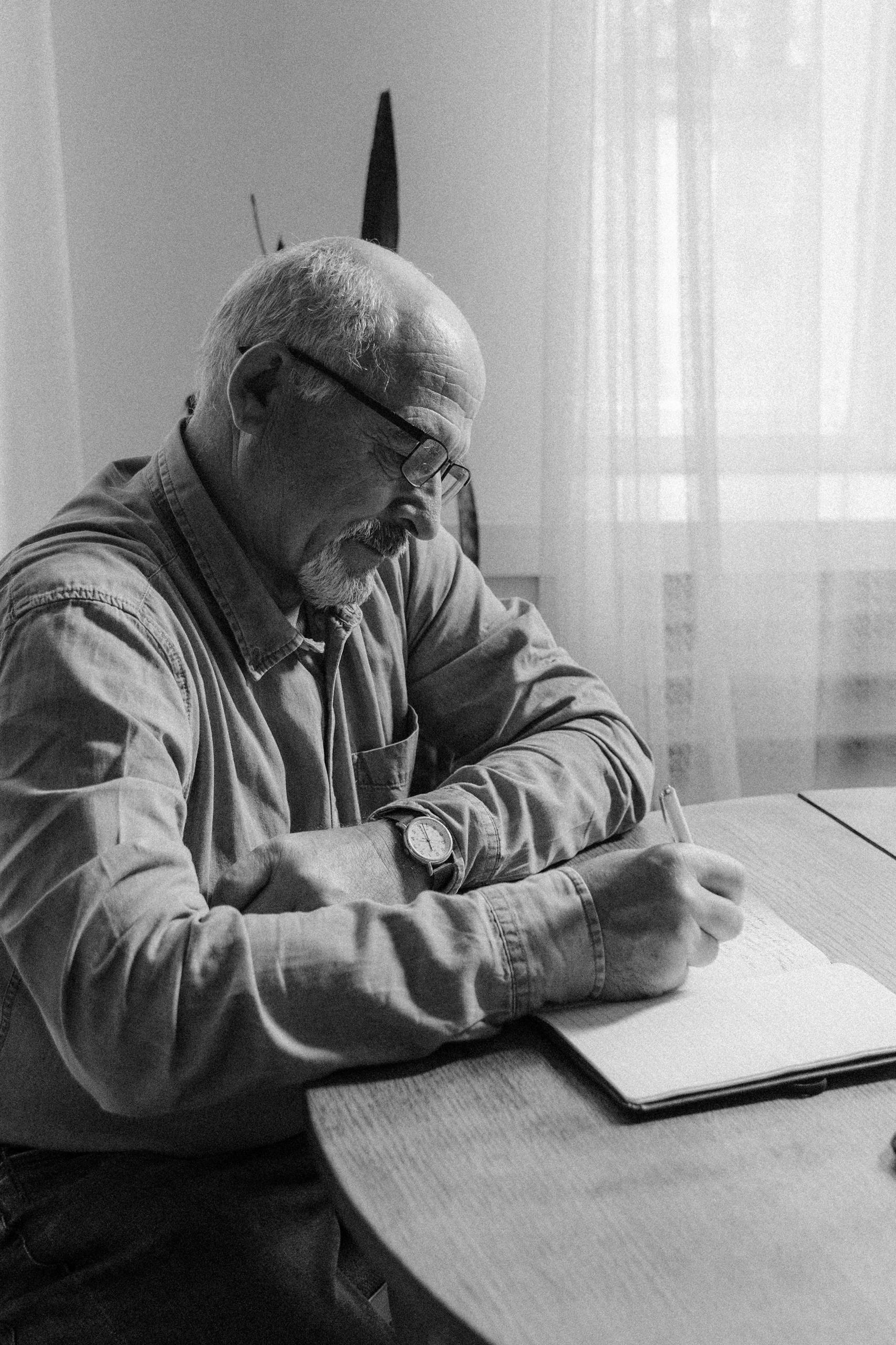
Writing Your Memoir: A Guide for Seniors Ready to Tell Their Story
At some point, most people feel it: the pull toward the story of their own life. Maybe it arrives quietly, while sorting through old photographs. Maybe it comes with urgency after a health scare, or gradually as the friends who shared those years begin to disappear. Maybe a grandchild asks a question you realize you have never answered, and you understand with a start that if you do not answer it — on paper, in your own words — the answer may disappear with you.
Memoir writing is one of the most meaningful creative endeavors available to older adults. It is also widely misunderstood. Most people who are drawn to writing their life story hold back because they believe some version of the same set of mistaken assumptions. This article is designed to dismantle those assumptions and get you writing.
What Memoir Is (And Isn’t)
Memoir is not autobiography. Autobiography traces the arc of an entire life, typically from birth to the present, in sequence. Memoir is different. A memoir focuses on a specific period, theme, or set of experiences — and explores them with the depth and subjectivity of literature. You do not have to be famous to write a memoir. You do not have to have done anything extraordinary. What you have to have is experience — which, at 65 or 72 or 80, you have in abundance.
Memoir is not therapy — though it can be therapeutic. The goal is to create a literary artifact: a story told well enough that a reader wants to keep reading.
Memoir is not the whole truth and nothing but the truth. Memoir is true — it is nonfiction — but memory is imperfect, selective, and interpretive. Memoir captures your experience of what happened, which is not the same as a court transcript. This is not a flaw to overcome. It is the essential nature of the form.
Why Now Is the Right Time
There is a common tendency to think of memoir as something for later. This tendency should be firmly resisted. First, the practical matter: memories fade. The specific sensory details that make memoir come alive — the smell of a particular kitchen, the exact cadence of a voice, the texture of an afternoon in 1974 — are most available now, while they are still connected to living neural networks.
Second, the perspective you have right now — on a childhood seen from 60 or 70 years away, on a marriage seen from its full length, on a career seen from after its end — is irreplaceable. Third, memoir writing is itself a way of living more fully in the present. The practice of noticing — of paying attention to the details of your current life as potential material — makes the present more vivid and more conscious.
Finding Your Subject
The question “What should I write my memoir about?” is almost always the wrong question. The right question is: What do I keep returning to?
Not what is most impressive, or what others would find most interesting, but what keeps surfacing, unbidden, in your memory. Some productive ways to find your subject:
- The recurring image: What visual memory keeps coming back to you? A specific place, a specific moment, a specific face? Follow it.
- The loaded conversation: What topic, when it comes up at family gatherings, becomes charged? What do you always change the subject away from? What do your children not know?
- The life-changing event: Not necessarily dramatic — sometimes the most formative events are quiet ones. A moment when you understood something irreversibly. A choice made or not made.
- The inheritance: What did you receive from your parents — habits, wounds, gifts, fears, values — that you have been reckoning with your whole life?
You do not need to know your theme before you begin. Most memoir writers discover their themes in the writing.
How to Begin
The First Draft Is Not the Real Draft
The most important thing about beginning is to lower your expectations for the beginning. Your first draft is not the memoir. It is the raw material from which the memoir will eventually be made. Write badly. Write honestly. Write more than you will use. The editing — the selection and shaping — comes later.
Start With a Scene
Do not begin with “I was born in…” Begin with a scene: a specific moment in time, rendered with sensory detail. Where are you? What does the room smell like? What is the light doing? What happens? Drop the reader into a living moment. The backstory — the context, the family history, the explanation — can come later.
Write Toward What Is Hard
Memoir that avoids difficulty is memoir that avoids truth. The most compelling memoirs are honest about failure, shame, confusion, and loss — not in a self-flagellating way, but in the way that all honest self-examination requires: looking without flinching.
Use Dialogue
Remembered dialogue is one of the most powerful tools in memoir. You are not transcribing — you are reconstructing. The dialogue should be true to the spirit and substance of the conversation, even if you cannot remember the exact words. Dialogue brings scenes to life, reveals character, and accelerates pace.
Finding Community and Support
- Adult education programs at community colleges (often free or very low cost)
- Senior centers with writing programs
- Public library writing workshops
- Memoir writing classes on Skillshare or Coursera
- The Memoir Project (TheMemoirProject.com), dedicated specifically to older adult memoir writers
A Simple Writing Practice to Begin Today
Set a timer for 20 minutes. Write about a specific place from your childhood — the house, the backyard, the neighborhood, the school. Do not write about events or feelings yet. Just the physical place: what it looked like, smelled like, felt like. What was in the corner of the room? What sounds came through the window?
When the timer goes off, read what you wrote. Notice the details that surprised you — the ones you did not know you remembered until you wrote them down.
That is memoir. That is what it does. It finds the things you thought were lost.
[…] Writing Your Memoir: A Guide for Seniors Ready to Tell Their Story […]
[…] Writing Your Memoir: A Guide for Seniors Ready to Tell Their Story […]