





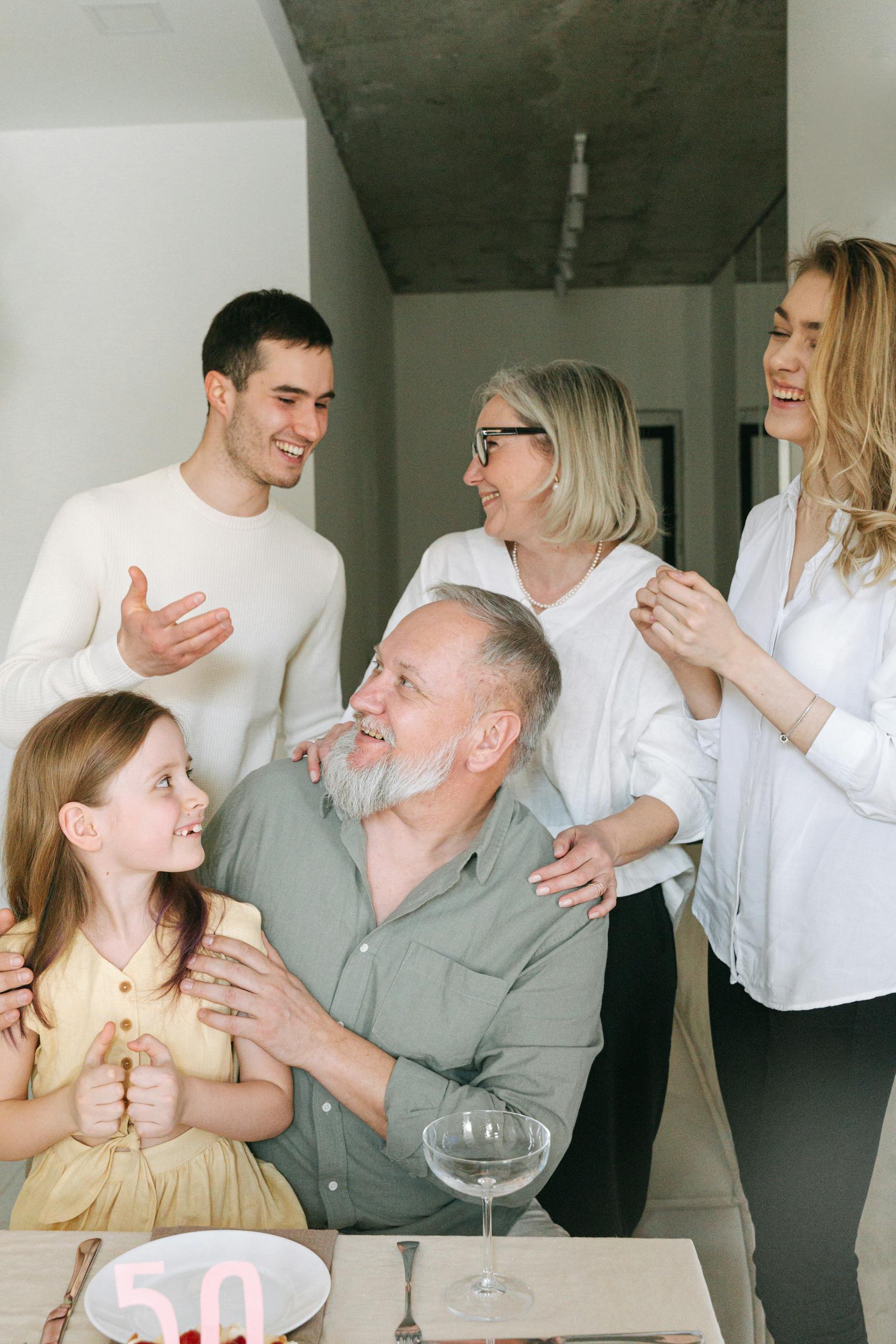
When Grandparents Multiply: Navigating Holidays and Family Time in a Blended Family
The holiday table is where blended family complexity becomes most visible. Before the new partnership, each family had its traditions, its rhythms, its sense of who belonged and what the occasion meant. Now two of those traditions must somehow coexist — or be renegotiated — and the people at the table are adults with long memories, strong feelings, and no particular obligation to pretend otherwise.
Holiday conflict in blended families is among the most predictable and most preventable sources of tension. It is predictable because the collision of competing expectations happens at the same points on the calendar every year. It is preventable because the conflicts, when they are understood clearly, are negotiable — they just require more deliberate negotiation than most families attempt.
Why Holidays Hit So Hard
Holidays carry disproportionate emotional weight because they are the occasions on which family identity is most explicitly expressed. The Thanksgiving table is not just a meal — it is a statement of who counts as family, who belongs at the center of things, what the rituals of belonging look like. When that table changes — when new people appear, when familiar configurations shift, when the guest list becomes a negotiation — it feels like a statement about family identity, not just logistics.
Adult children who are managing complicated feelings about a parent’s new partner often find those feelings most acute at the holidays. The new partner’s presence at Christmas dinner feels qualitatively different from their presence at a casual summer gathering. The symbolism is higher, and the feelings are correspondingly more intense.
The Most Common Holiday Conflicts
Whose house, whose traditions. Both partners likely have established holiday traditions — the places gatherings happen, the foods that are expected, the sequence of the day. When the couple is together, whose traditions take precedence? Whose children feel that their family’s way of doing things has been displaced? These conflicts rarely surface as direct arguments — they surface as chronic low-grade dissatisfaction, as children who “can’t make it this year,” as gatherings that are politely attended but feel hollow.
The combined gathering nobody wants. Some couples default to a single combined holiday gathering — all of both families together — as the path of least resistance. For families that are genuinely comfortable with each other, this can work beautifully. For families where the blending is still tender, it often produces the worst of all worlds: a table full of people managing their feelings in a formal context, with nowhere for the discomfort to go.
Grandchildren as the point of maximum pressure. When grandchildren are involved, holiday allocation becomes even more loaded. Grandchildren belong to multiple family systems simultaneously, and each set of grandparents has legitimate claims on holiday time. A child being pulled between their maternal grandparents, their paternal grandparents, and now a step-grandparent is navigating more than any child should have to navigate on Christmas morning.
Approaches That Work
Decoupling the couple’s celebration from the family’s celebration. One of the most effective approaches for early-stage blended families is for the couple to celebrate holidays in their own way — together, with each other — while each partner also celebrates separately with their own children and grandchildren. This removes the pressure of combined gatherings before the relationships are ready to support them. The couple’s holiday is not diminished by this arrangement; if anything, it is more intentional and more theirs.
Creating new traditions that belong to the blended family. Rather than determining which partner’s existing traditions take precedence, some couples create entirely new traditions for the combined family — a gathering at a different time of year, a different format, something that is explicitly new rather than a modification of something old. A “Cousin Weekend” in spring or a joint summer trip has no prior template to compete with. It belongs equally to everyone because it was invented by everyone.
Planning the calendar explicitly, well in advance. Holiday conflict is almost always exacerbated by ambiguity. When it is unclear where people are expected to be and when, expectations accumulate silently and then collide. A calendar that is established in October — who is doing what, when, where, what each gathering is and is not — removes the ambiguity that feeds conflict. It also gives adult children and grandchildren enough lead time to make their own plans, which is a form of respect.
Allowing different family members to find their own comfort level. Not every adult child will want to attend every gathering that includes the new partner. Accepting that as a valid choice — rather than interpreting it as rejection or applying pressure to change it — often leads to more attendance, not less, because the choice becomes genuinely free.
The Long Game
Blended families that have been together for many years often report that holidays became easier as the family found its own shape — not through forced harmony but through the gradual accumulation of shared experiences and the softening of resistance that time and goodwill produce. The first Thanksgiving is almost always the hardest. The fifth is usually manageable. The tenth may be genuinely warm.
The goal of early holiday navigation is not to force the warmth to arrive ahead of schedule. It is to avoid the ruptures — the angry absences, the explicit confrontations, the hurt feelings that calcify into permanent resentments — that prevent the warmth from arriving at all.
Related Articles
- Yours, Mine, and Ours: Building a New Family Identity Without Erasing the Old One
- Starting Over Together: What Blended Families Really Look Like After 50
- Money, Wills, and “Who Gets What”: Financial Planning for Blended Families After 50
- United Front: How Couples in Blended Families Stay on the Same Team