





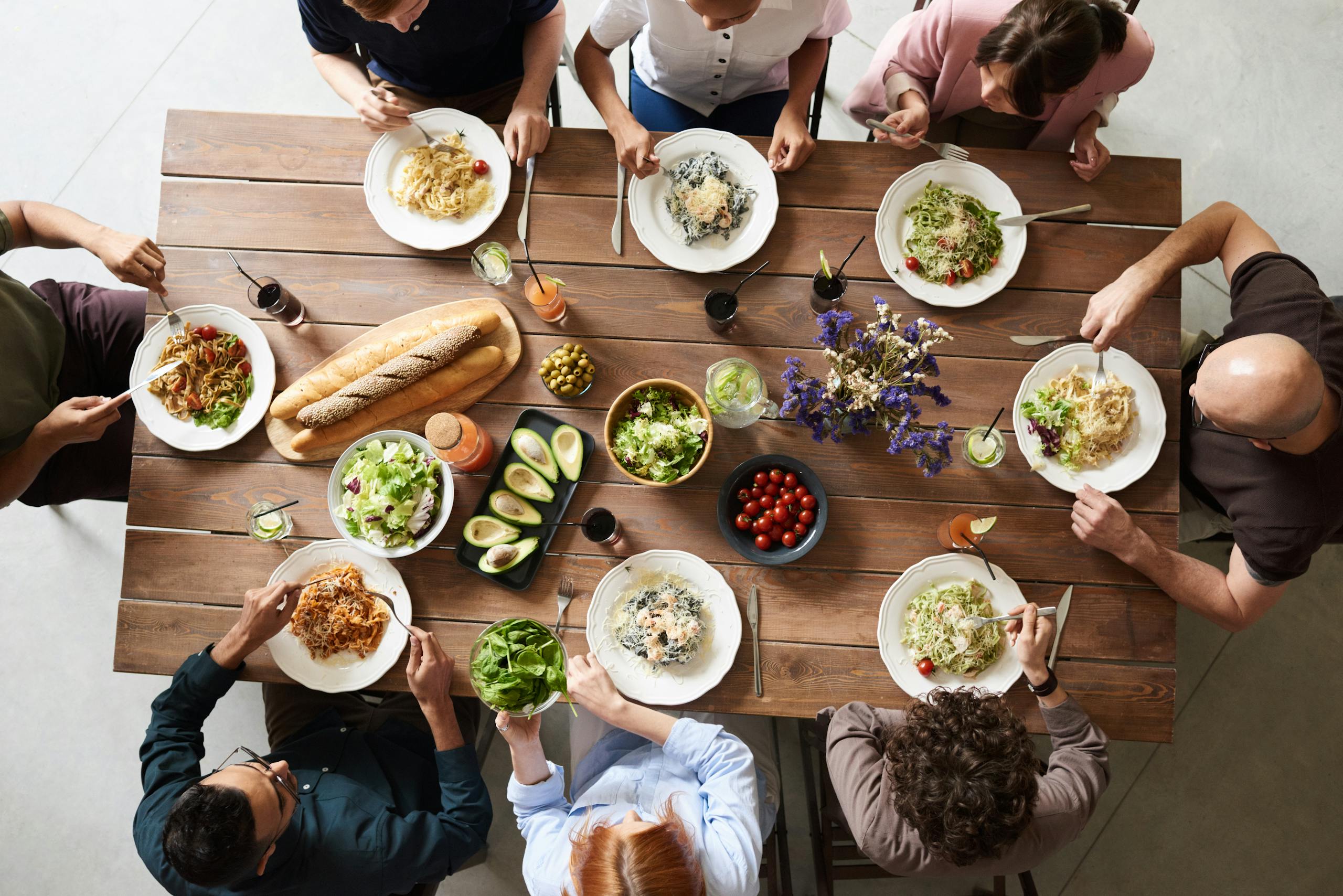
Food as a Gateway: How Cooking and Sharing Meals Opens Cultural Doors
Every culture in the world feeds its people, and in the way it does that — what it grows, how it prepares it, who cooks it, how it is served, what is said over it, what eating together means — is encoded a remarkable amount of information about history, geography, religion, family structure, aesthetics, and the deepest assumptions people hold about the good life. Food is not incidental to culture. It is one of culture’s primary languages.
This makes it one of the most accessible gateways to cross-cultural understanding available — and one of the most pleasurable. You do not need fluency in Mandarin to learn something real about Chinese culture through its food. You do not need to have traveled to India to sit at a table with an Indian family and learn, through the meal, something that a guidebook cannot convey. And the act of cooking together — which is different from and richer than eating together — creates a particular kind of intimacy that crosses cultural distances with surprising ease.
What Food Reveals That Words Don’t
Consider a few examples of what food reveals about a culture that is not otherwise easily accessible:
In Japan, the concept of ichiju sansai — one soup and three sides — structures a traditional meal around balance, moderation, and variety. The presentation of food is as important as its taste; the visual composition of a plate is understood as a form of art. The knife work of a Japanese chef is a respected craft with decades of training behind it. All of this reflects something about Japanese values — precision, restraint, the elevation of craft — that shapes daily life far beyond the dining table.
In West African food traditions, the sharing of a communal pot — everyone eating from the same dish — expresses a relational philosophy in which individual boundaries are understood differently from the Western norm. The meal is an assertion of community. In Ethiopia, the practice of gursha — feeding a morsel of food directly into another person’s mouth as an act of love and respect — makes literal a connection that most Western food cultures keep symbolic.
In Mexico, the preparation of mole — a sauce requiring dozens of ingredients and hours of labor — is not just cooking. It is an act of love calibrated to the occasion; the complexity of the dish signals the importance of the person being served. The same logic runs through the elaborate feasts prepared for Lunar New Year in Chinese communities, or the specific dishes that mark breaking the Ramadan fast in Muslim households around the world.
These traditions are not frozen in the past. They are living practices, adapted by each generation, carried in bodies and in memory, and available — to those who approach with genuine curiosity — as a form of direct cultural knowledge.
Cooking Classes Across Cultural Lines
Taking a cooking class from a practitioner of another cuisine is one of the most direct and rewarding forms of cross-cultural learning available. It is also increasingly accessible: cooking schools, community kitchens, cultural centers, and independent instructors in most cities now offer classes in cuisines from around the world, taught by people for whom that cuisine is a living inheritance rather than a recipe collection.
The best of these classes go beyond technique. A Vietnamese cooking class taught by a Vietnamese immigrant who remembers her grandmother’s kitchen brings with it stories, context, and the specific knowledge of someone who learned the cuisine as a cultural practice rather than a culinary art. The herbs are not just ingredients; they are the herbs her family has always used, and she knows which ones are harder to find here and what to substitute without losing the essence. That kind of knowledge is not in any cookbook.
Look for classes offered through cultural organizations, immigrant community centers, and internationally oriented cooking schools. Communal cooking experiences — supper clubs, potluck dinners organized around a specific cuisine, cooking cooperatives — offer the additional dimension of community: multiple people learning together, sharing the labor, and sitting down to eat what they have made.
Hosting and Being Hosted
One of the most powerful cross-cultural food experiences is the simplest: being invited to eat in someone’s home, or inviting someone into yours. The home meal is different from the restaurant meal in every culture — more intimate, more revealing, more laden with the specific choices of the person who prepared it.
When a Moroccan neighbor invites you to Eid dinner, you are not eating Moroccan food. You are eating her Moroccan food — the dishes her mother made, adapted to the ingredients available here, adjusted for the tastes of her children, set on a table that combines the objects of two worlds. That specific meal, in that specific home, carries information that no restaurant or cookbook can provide.
The vulnerability of being a guest — of not knowing the protocols, of needing to be guided through the meal, of perhaps encountering dishes that are unfamiliar — is, if you let it be, a form of intimacy. It positions you as a learner, which is the most honest position available when encountering a culture that is not your own.
Farmers Markets, Ethnic Grocery Stores, and the Food of Unfamiliar Places
For those building toward cross-cultural food engagement, two neglected resources deserve attention: ethnic grocery stores and farmers markets with diverse vendors.
Walking through a Korean grocery store, a Mexican carnicería, an Indian spice market, or a Middle Eastern halal shop with genuine curiosity — reading labels, asking questions of the staff, buying things you do not know how to use — is a form of cultural learning that is available in most American cities and costs almost nothing. The staff of these stores are often knowledgeable, proud of their inventory, and genuinely pleased when someone who is not from their community wants to understand what they are looking at.
Farmers markets in diverse urban areas often feature vendors representing agricultural traditions from around the world — selling vegetables, prepared foods, and spices that reflect the heritage of immigrant farming communities. These vendors are often among the most knowledgeable food people in any community, and a conversation over a pile of unfamiliar greens can be the beginning of something more.
The Table as Meeting Ground
In virtually every culture in the world, the shared meal is understood as the primary site of hospitality, belonging, and the repair of rupture. People who have quarreled break bread together. Strangers are made guests at the table. The act of eating with someone is an act of trust — a literal vulnerability, the body open and nourished in the presence of another.
This is why food works so well as a cross-cultural bridge. It does not require the same language. It does not require shared history or belief. It requires only the willingness to sit, to taste, to ask what this is and where it comes from, and to receive the answer with genuine interest. The table is always open. You just have to pull up a chair.
Related Articles
- The Gift of Cultural Friendship: Why Connecting Across Cultures Changes You
- Yours, Mine, and Ours: Building a New Family Identity Without Erasing the Old One
- Building Your Cultural Community: How to Find Your People in the Arts After 50
- How to Market Yourself as a Fractional Executive or Skilled Volunteer: Your Second-Act Brand
[…] Food as a Gateway: How Cooking and Sharing Meals Opens Cultural Doors […]
[…] Food as a Gateway: How Cooking and Sharing Meals Opens Cultural Doors […]
[…] Food as a Gateway: How Cooking and Sharing Meals Opens Cultural Doors […]