





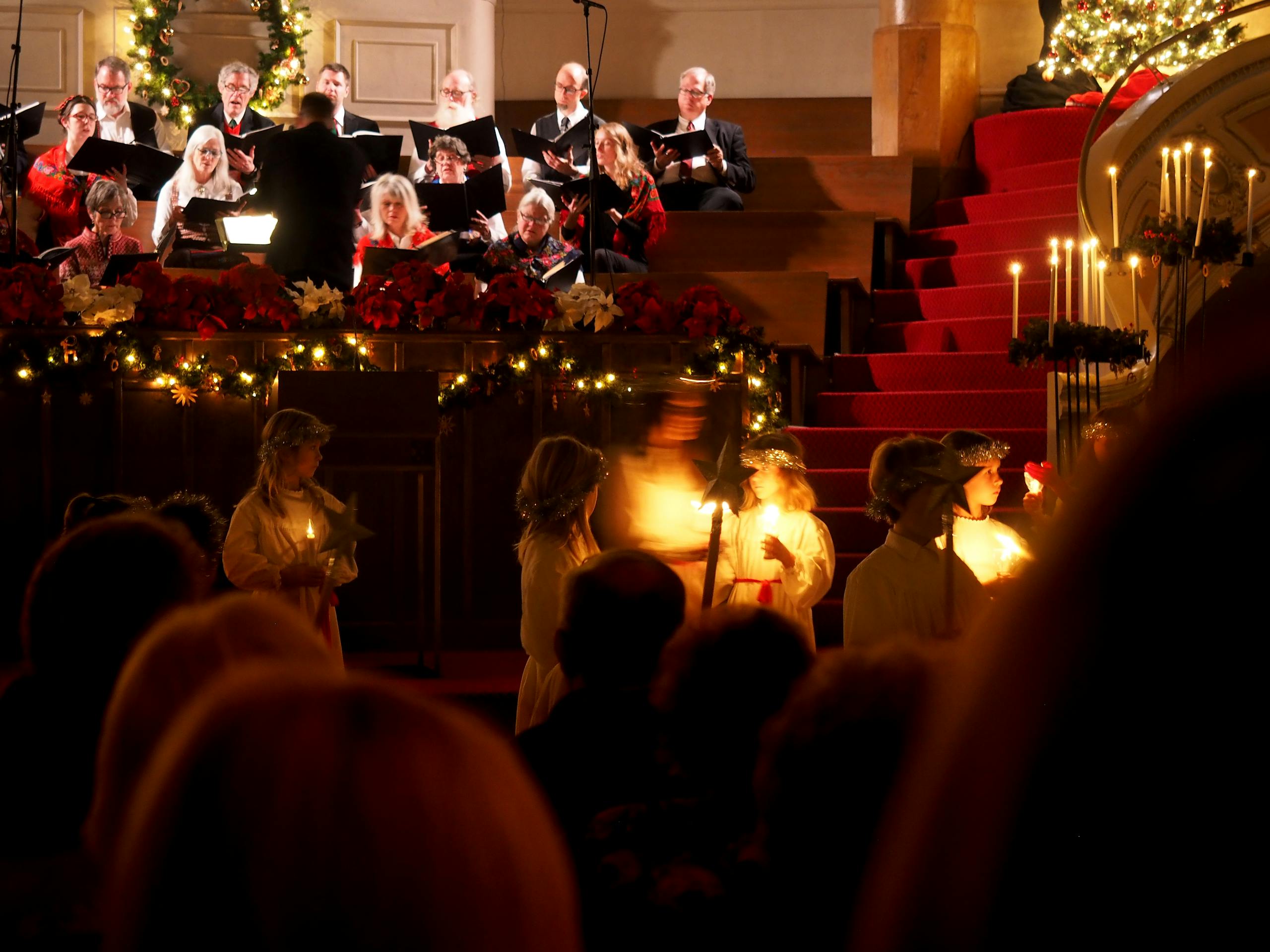
Why Joining a Choir May Be the Best Thing You Do This Year
In 1998, a researcher named Gene Cohen began an experiment. He divided a group of older adults in Washington D.C. into two groups: one participated in a professionally led community chorale program; the other did not. After a year, the singers reported better health, fewer doctor visits, less medication use, and lower rates of depression. They had fallen less. They felt more in control of their lives. The comparison group showed none of these improvements.
This study — replicated and extended in subsequent research around the world — is one of the most striking findings in the science of creative aging. Choral singing, it turns out, is not merely pleasant. For older adults, it appears to be genuinely good medicine.
What Happens When You Sing Together
The science of group singing is now well-established, and the mechanisms are understood with increasing clarity. When people sing together, several things happen simultaneously that are unusual in other social activities:
Breathing synchronizes. Choral singing requires controlled, deliberate breathing — deep inhalation, controlled exhalation on the phrase, attention to breath support throughout. This activates the parasympathetic nervous system, reducing cortisol and producing measurable reductions in physiological stress. And when a group sings together, their breathing patterns converge — an extraordinary form of collective regulation.
Heart rates converge. Research from the University of Gothenburg found that when choir members sing together, their heartbeats synchronize — literally. Singing a hymn or a choral piece, the heart rates of the singers align. The mechanism appears to be the shared breath patterns, which modulate the autonomic nervous system in similar ways across all singers simultaneously. The result is a form of physiological bonding that is genuinely unique to group singing.
Oxytocin releases. Singing — particularly in a group — triggers the release of oxytocin, the hormone associated with bonding and trust. This may explain why choristers consistently report feeling close to their fellow singers remarkably quickly, even when they arrive as strangers.
The brain integrates multiple systems. Choral singing requires simultaneously processing pitch, rhythm, words, the sounds of other singers, visual cues from the conductor, and your own embodied sensation of sound and breath. This wide-ranging neural integration is cognitively demanding in a way that is distinctively beneficial — exercising attention, memory, auditory processing, and executive function simultaneously.
What Kind of Choir?
The range of choral experience available is wider than most people realize. Finding the right fit matters — not just in terms of music, but in terms of culture, commitment level, and repertoire.
Community choirs: Nonprofessional choirs open to adult singers of all experience levels. Most do not require an audition, particularly in lower voice sections. Community choirs typically rehearse weekly and perform two to four times per year. Repertoire varies enormously — some focus on classical choral music, others on popular song, folk, or jazz. Membership is usually inexpensive, often $50–$150 per season, including performance costs.
Church and synagogue choirs: Many congregational choirs welcome non-members and offer a welcoming, experienced community of singers. Repertoire is typically sacred music. Rehearsal schedules are often lighter than community choirs, with one weekly rehearsal before services. Many offer a director who provides basic vocal training as part of the rehearsal process.
Senior choirs: An increasing number of communities have choirs specifically constituted for older adult singers. These offer repertoire and pacing suited to the group, a social atmosphere oriented around shared life experience, and often a lower commitment threshold than general community choirs. Many senior living communities have resident choirs; local senior centers often host or can help locate singing groups.
Barbershop and Sweet Adelines: The Barbershop Harmony Society (men’s) and Sweet Adelines International (women’s) maintain chapters throughout the country, each with a specific a cappella harmonic style, a competitive culture, and enthusiastic communities. These groups are often warmly welcoming to beginners and provide significant vocal training as part of membership.
Gospel choirs: Gospel music carries one of the most powerful and emotionally direct choral traditions in American music. Community gospel choirs associated with churches often welcome singers of any background, and the physical, full-voiced style of gospel singing is particularly rewarding for new singers discovering the capacity of their own voices.
“But I Can’t Sing”
This is the objection most heard from people who might otherwise join a choir. It deserves a direct response: the vast majority of people who believe they cannot sing are wrong. Most were told, at some point in childhood, that they were off-key, or were excluded from a choir, or simply absorbed the message that singing was for other people. These experiences are common and almost universally inaccurate.
The human voice is an instrument that improves with use and guidance. A few sessions with a community choir director who provides basic vocal warm-ups and instruction will reveal, for most people, a voice that is more capable than they believed. And in the context of a choir — surrounded by other voices, blending into a collective sound — the pressure of individual performance disappears. You are not singing. You are part of something singing.
Finding Your Choir
The easiest starting points: your local senior center or community arts organization; a Google search for “[your city] community choir” or “[your city] choral society”; the Chorus America website (chorusamerica.org), which maintains a searchable directory of choral organizations across the United States; and your religious congregation if you belong to one. Most choirs welcome visitors at rehearsal — call ahead, explain you are curious, and come listen before you commit.
The weekly rehearsal will become, for many people who find it, the fixed point of their week — the appointment they most look forward to. The friends made in a choir tend to be lasting ones. The music, accumulated over seasons and years, becomes part of your life in a way that is difficult to describe to someone who has not experienced it. But it is real, and it is waiting.
Related Articles
- The Power of Community: Why Social Connection Matters More After 50
- LGBTQ+ Relationships in Later Life: Love, Community, and Identity After 50
- Dating Again After 50: How to Re-enter the Relational World With Clarity and Confidence
- The Gift of Cultural Friendship: Why Connecting Across Cultures Changes You