





Exercise and Mental Health: What the Science Says
Physical activity is one of the most powerful interventions available for mental health — yet it remains dramatically underutilized compared to pharmaceutical and therapeutic approaches. Not because it’s ineffective, but because no company profits from prescribing it, and because starting to exercise when you’re depressed or anxious feels impossibly hard.
The research, however, is consistent and compelling. Exercise is not just good for mental health. For many conditions, it’s as effective as first-line treatments.
How Exercise Affects the Brain
Exercise produces a cascade of neurochemical changes that directly affect mood, cognition, and mental resilience:
Neurotransmitters: Aerobic exercise increases levels of serotonin, dopamine, and norepinephrine — the same neurotransmitters targeted by most antidepressants. This effect occurs immediately after exercise and is one mechanism behind the well-documented “post-exercise mood lift.”
BDNF (Brain-Derived Neurotrophic Factor): Often called “Miracle-Gro for the brain,” BDNF promotes the growth of new neurons (neurogenesis) in the hippocampus — the brain region central to memory and emotional regulation. Chronic depression is associated with hippocampal shrinkage; exercise reverses this. Higher BDNF is also linked to better cognitive function and resilience against stress.
Endorphins: The famous “runner’s high” involves endorphins, but research now shows that endocannabinoids (similar compounds to active ingredients in cannabis) also contribute significantly — producing feelings of calm and reduced anxiety following aerobic exercise.
HPA axis regulation: Regular exercise improves the efficiency and calibration of the stress-response system, leading to lower cortisol levels at rest and a faster return to baseline after stressors.
Exercise as Treatment for Depression
A landmark 1999 study from Duke University (the SMILE trial) compared exercise alone, antidepressants alone, and combined treatment in people with major depression. All three groups showed equivalent response — but at the 10-month follow-up, the exercise group had significantly lower relapse rates than the medication group.
Multiple subsequent meta-analyses have confirmed: exercise is as effective as antidepressants for mild-to-moderate depression, with comparable response rates and better long-term relapse prevention. A 2023 Lancet meta-analysis of 97 studies found that exercise was significantly superior to control conditions, with effect sizes comparable to psychotherapy.
The catch: people who are severely depressed struggle to initiate exercise precisely when they need it most. This is where behavioral support, starting small, and sometimes combining exercise with other treatments makes sense.
Managing Anxiety Through Movement
Anxiety is characterized by heightened physiological arousal — elevated heart rate, muscle tension, shallow breathing. Exercise is one of the few interventions that addresses this arousal both acutely (a single session reduces anxiety) and over time (regular exercise reduces baseline anxiety sensitivity).
Research shows that people who exercise regularly have a lower anxiety response to stressors than sedentary people — they don’t just manage anxiety better after it develops; they develop less of it in the first place.
For panic disorder, a counterintuitive finding: aerobic exercise that deliberately produces elevated heart rate appears to reduce the fear response to those physical sensations over time, essentially providing repeated exposure that desensitizes the panic response.
Cognitive Benefits and Brain Health
Regular aerobic exercise increases the volume of the hippocampus, prefrontal cortex, and other regions critical for memory and executive function. A 2011 study found that adults who walked briskly for 40 minutes three times per week had a 2% increase in hippocampal volume over a year — compared to a 1.4% decrease in a control group. This is significant because hippocampal volume typically decreases with age.
Higher aerobic fitness is associated with better working memory, processing speed, attention, and executive function. Exercise is the most robust behavioral intervention for reducing dementia risk and slowing cognitive decline with aging.
How Much Exercise Is Needed for Mental Health Benefits?
Good news: the mental health benefits of exercise appear at relatively modest doses:
- As little as 10 minutes of moderate aerobic activity produces measurable improvements in mood and energy
- 150 minutes per week of moderate activity (30 minutes, 5 days) is the dose most consistently associated with significant mental health benefits
- More is generally better, up to a point — very high volume training (without adequate recovery) can have negative mental health effects
- Consistency matters more than intensity — regular moderate exercise outperforms occasional intense exercise for mental health outcomes
Types of Exercise for Mental Health
Aerobic exercise (running, cycling, swimming, dancing, brisk walking) has the strongest evidence base for depression and anxiety, particularly at moderate intensity.
Strength training has growing evidence for depression and anxiety, with a 2018 JAMA Psychiatry meta-analysis finding significant antidepressant effects.
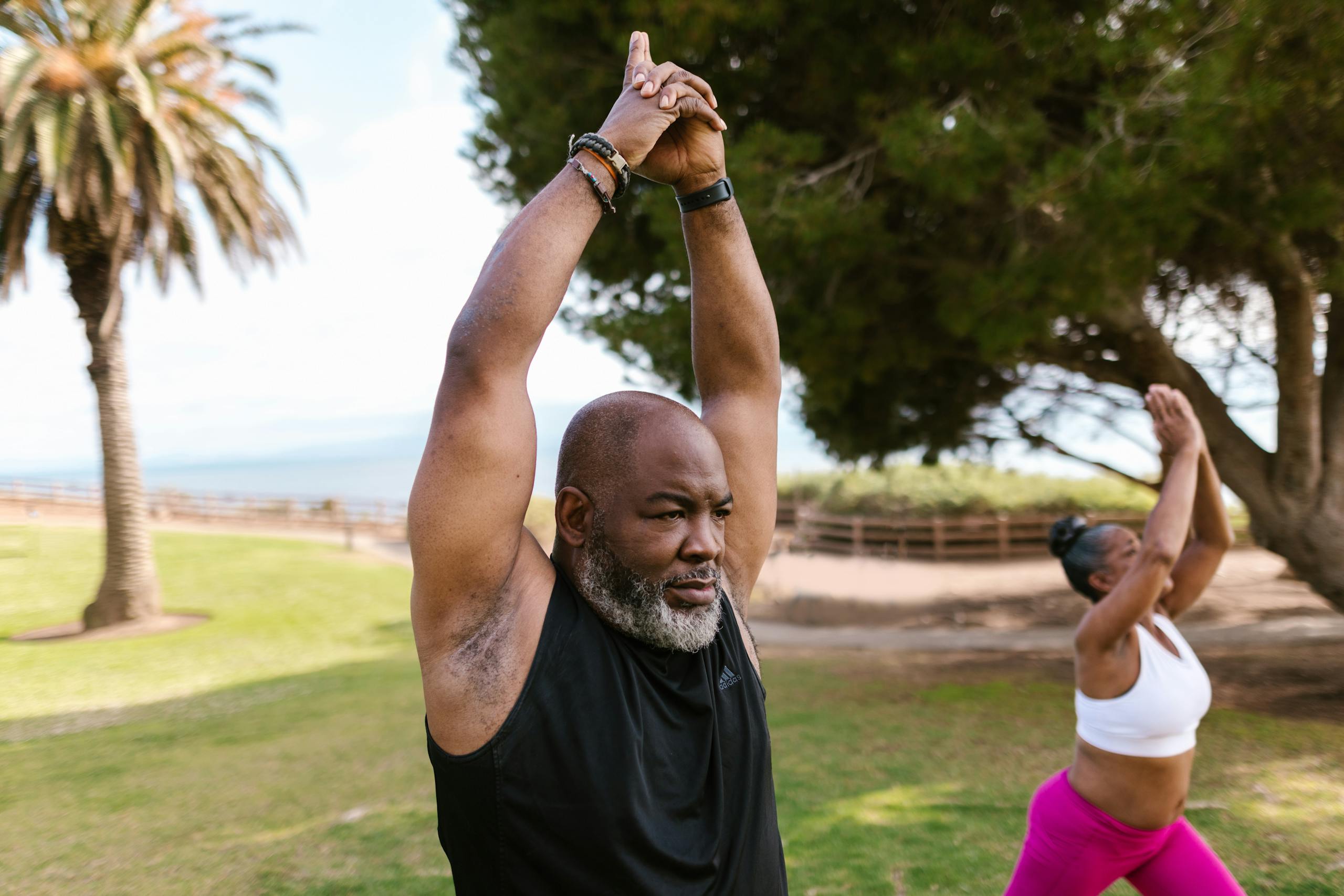
Yoga and mind-body exercise combines physical movement with breathwork and mindfulness — particularly effective for anxiety, stress, and PTSD.
Outdoor exercise adds the established mental health benefits of nature exposure to those of physical activity — a particularly potent combination.
Getting Started When You’re Struggling
Depression and anxiety make starting exercise feel impossibly difficult. The very symptoms that make exercise most needed — low energy, low motivation, negative self-assessment — are the barriers to initiating it.
The most evidence-backed strategy: start smaller than feels meaningful. A 5-minute walk counts. Getting dressed for exercise counts. Behavioral activation — doing the action before the motivation — is the approach supported by behavioral science. The motivation follows the action, not the other way around.
If you’re experiencing significant mental health challenges, please consider working with a therapist or physician who can support integrating exercise with other treatments.