





The Beginner’s Guide to Meditation and Mindfulness
Meditation has a reputation problem. People imagine a monk sitting cross-legged for hours, mind completely empty, achieving some unreachable state of inner peace. That’s not what meditation is — and that misunderstanding keeps millions of people from trying one of the most well-researched wellbeing practices available.
Meditation is, at its core, the practice of paying attention. Not emptying your mind — directing it. And the benefits of doing this consistently, even for short periods, are backed by decades of clinical research.
What Is Meditation, Really?
Meditation is a mental training practice in which you deliberately direct your attention — usually toward the breath, body sensations, sounds, or a repeated phrase — and practice noticing when your attention has wandered so you can return it. That act of noticing and returning is the exercise. It’s the mental equivalent of a bicep curl.
Mindfulness is a quality of awareness — being present to what’s happening right now, without judgment. Mindfulness meditation is the practice of cultivating that quality deliberately. You can also bring mindfulness to everyday activities: eating, walking, having a conversation.
Science-Backed Benefits
The research on meditation is extensive and, in key areas, robust:
- Stress reduction: Mindfulness-Based Stress Reduction (MBSR), an 8-week program developed by Jon Kabat-Zinn, has demonstrated significant reductions in cortisol and perceived stress across dozens of clinical trials
- Anxiety and depression: Multiple meta-analyses show mindfulness meditation is moderately to strongly effective for reducing symptoms of anxiety and depression, comparable to antidepressants in some studies
- Attention and focus: Regular meditation increases gray matter density in the prefrontal cortex — the brain region governing attention, focus, and decision-making
- Sleep: Research shows mindfulness-based interventions improve sleep quality and reduce insomnia symptoms
- Pain management: Mindfulness has been incorporated into pain management protocols, with evidence for reducing both pain intensity and emotional response to pain
- Emotional regulation: Meditators show greater activity in prefrontal areas that regulate the amygdala — the brain’s alarm system — leading to less reactive emotional responses
Common Misconceptions
“I have to empty my mind.” Absolutely not. The mind wanders constantly — that’s its nature. The practice is noticing when it has wandered and returning attention to the anchor. Thousands of wanders and returns in a single session is normal and beneficial.
“I don’t have time.” Ten minutes of meditation provides meaningful benefit. Research shows even 5 minutes of focused breathing has measurable effects on stress and focus.
“I’m bad at meditation.” There is no such thing as bad meditation. If you sat down, closed your eyes, tried to focus on your breath, and your mind wandered — you did it exactly right.
“It’s religious.” Secular mindfulness meditation has been entirely separated from its Buddhist origins and is widely practiced and researched in medical, corporate, and athletic contexts.
Types of Meditation
Focused attention: Direct your attention to a single anchor — usually the breath. Return whenever it wanders. The most studied and widely practiced form for beginners.
Body scan: Systematically move attention through different areas of the body, noticing sensations without judgment. Excellent for sleep and stress relief.
Loving-kindness (metta): Silently direct warm wishes toward yourself and others. Research shows this practice increases positive emotions and social connection.
Transcendental Meditation (TM): Uses a personalized mantra. Studied extensively for cardiovascular health. Requires instructor training.
Open monitoring: A more advanced practice where you observe whatever arises in consciousness — thoughts, sensations, sounds — without latching on or pushing away.
How to Meditate: A Step-by-Step Guide
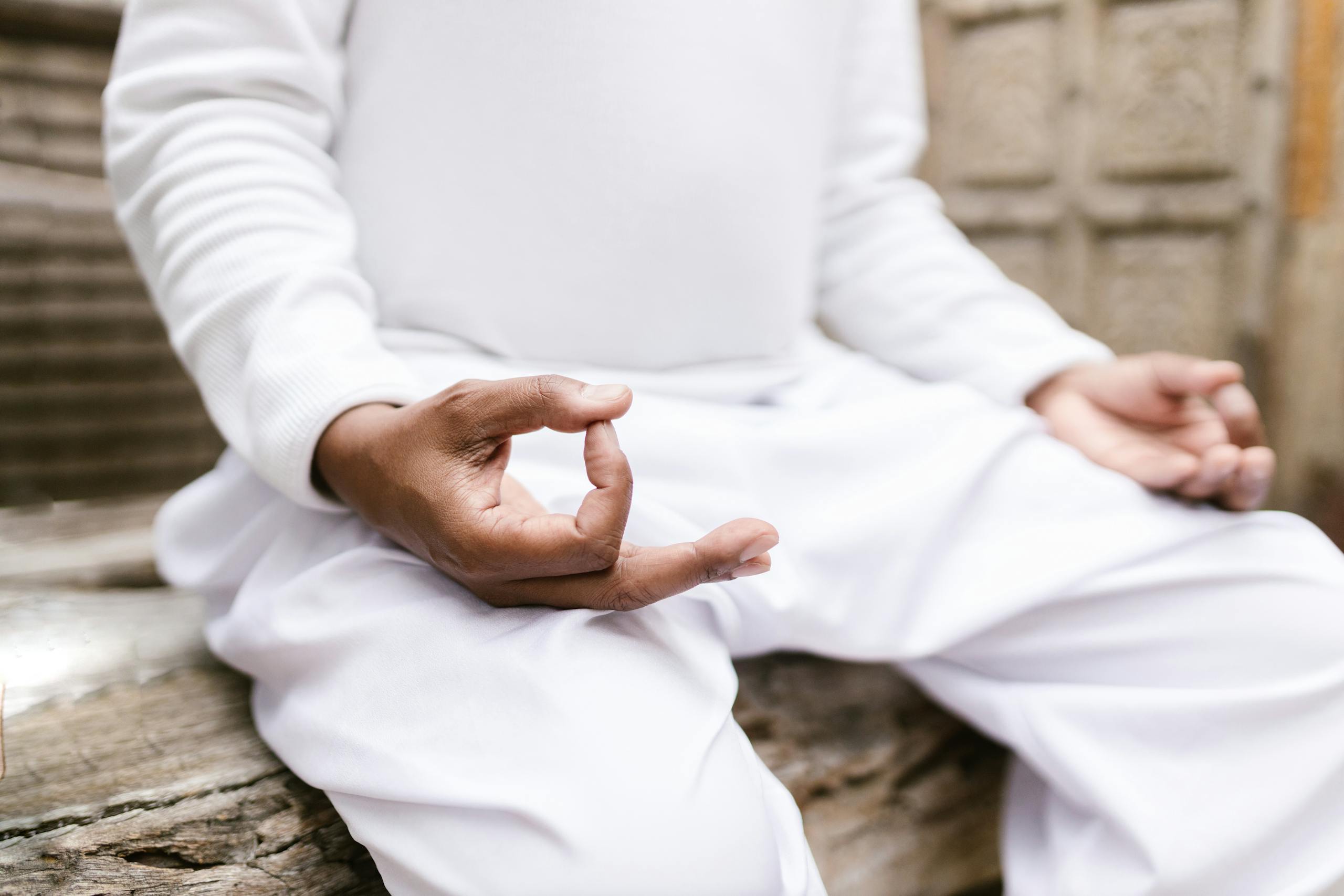
- Find a comfortable seated position — chair, floor, whatever works. You don’t need to sit in lotus pose.
- Set a timer for 5–10 minutes so you don’t have to watch the clock.
- Close your eyes or lower your gaze.
- Take a few deep breaths to settle.
- Direct your attention to the physical sensation of breathing — the rise and fall of your chest, the air passing through your nostrils. Not thinking about the breath. Feeling it.
- When your mind wanders (it will), gently return to the breath. No judgment. Just return.
- Continue until the timer sounds. End with a moment of stillness before reopening your eyes.
Apps and Resources
- Headspace: Excellent for beginners; structured courses, guided sessions
- Calm: Guided meditations, sleep stories, breathing exercises
- Insight Timer: Free, enormous library of guided meditations across all traditions and lengths
- Waking Up (Sam Harris): More philosophical approach; excellent for skeptics
Building the Habit
The most important thing is consistency over duration. Five minutes daily for a month outperforms one 60-minute session followed by nothing. Stack it to an existing habit: morning coffee, after brushing teeth, before bed. The same time each day builds automaticity faster.
Most people who meditate consistently report that it’s one of the most valuable practices in their daily life — not because of any dramatic transformation, but because of a quieter, more reliable ability to choose their response rather than just react.
[…] The Beginner’s Guide to Meditation and Mindfulness […]