





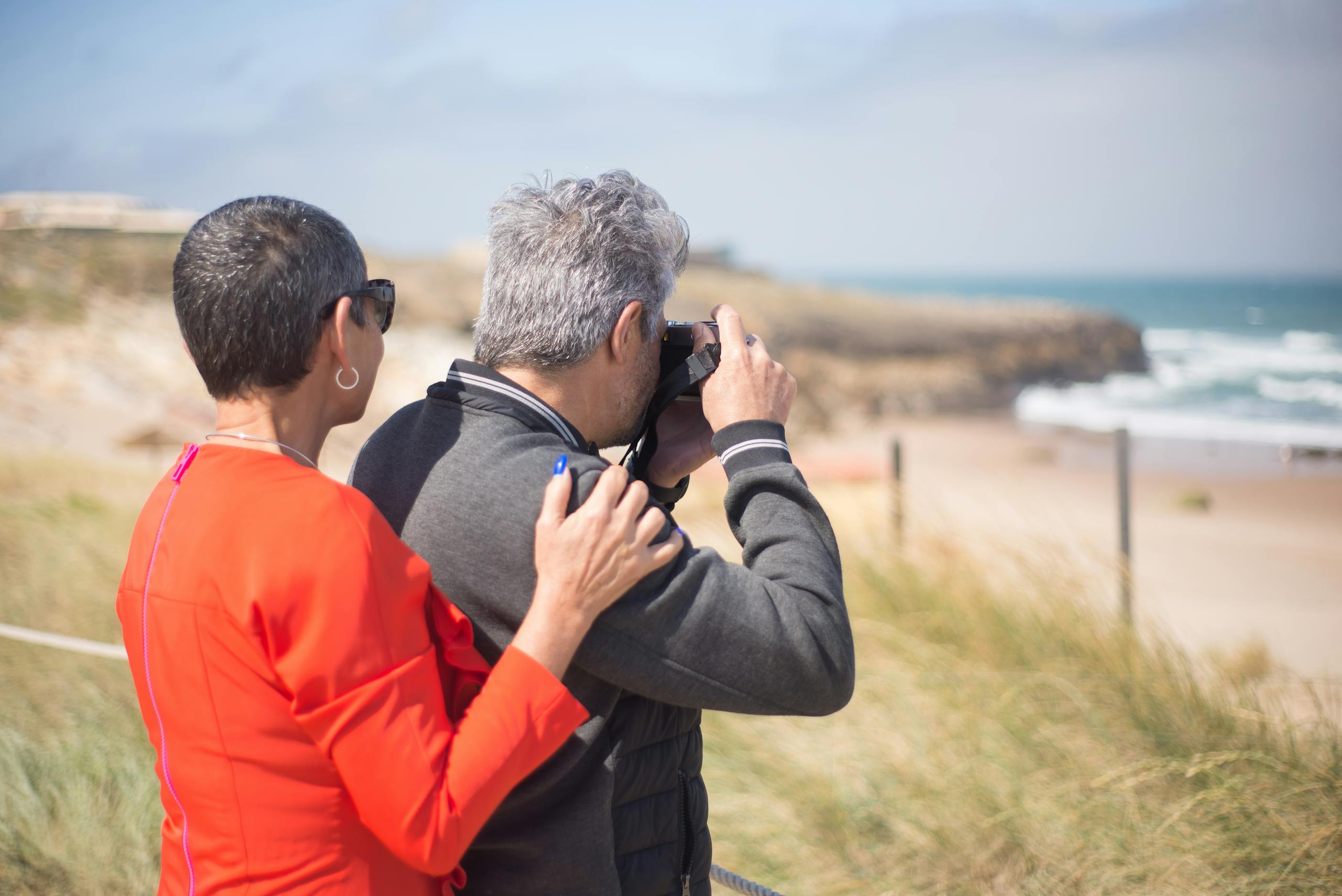
Your Body and Mind on a Day Trip: The Real Health Benefits of Short Getaways
We tend to think of travel as a reward — something earned through hard work, saved for over time, taken when conditions are favorable. But the research on travel and health suggests a different framing: regular travel, including short and inexpensive forms of it, is a health practice. Something that affects the body and mind in measurable, significant ways. Something closer to exercise or good nutrition than to luxury.
This reframing matters particularly for adults over 50, for whom the health stakes of lifestyle choices are higher and the potential years of benefit are longer. Understanding what short getaways actually do for your health — and why the benefits are accessible at any budget and any distance — is a compelling reason to make them a regular feature of life rather than an occasional indulgence.
Stress Reduction: The Most Immediate Effect
The most consistently documented health effect of travel is stress reduction. Leaving your habitual environment removes, at least temporarily, the ambient stressors that accumulate in daily life: the unfinished to-do list visible from the desk, the household maintenance tasks that nag at the edge of attention, the social obligations and routines that create a low-level background noise of demand.
Research published in the International Journal of Environmental Research and Public Health found that even a short leisure trip of two to three days produced significant reductions in self-reported stress and substantial improvements in mood, physical wellbeing, and energy levels. Critically, these benefits began appearing within the first day and were strongly present by day two — meaning that the short getaway delivers most of the stress-relief benefit of a longer vacation in a fraction of the time.
For adults over 50, chronic stress is particularly damaging. The physiological effects of sustained cortisol elevation — increased inflammation, disrupted sleep, suppressed immune function, elevated cardiovascular risk — are real and cumulative. Regular practices that interrupt the stress cycle, including regular short travel, contribute meaningfully to the biological metrics of aging.
Physical Movement: The Hidden Workout
A day trip to a city, a nature reserve, a historic site, or a farmers market is almost always a significantly more active day than a day at home. Walking through a new environment is intrinsically engaging — there is always something ahead to see — in a way that a treadmill or a familiar neighborhood walk is not. The result is that most people walk substantially more on a day trip than they would on a typical day at home, without it feeling like exercise.
Step counts of 10,000 to 20,000 on active day trips are common among people who might average 4,000 to 6,000 on typical home days. This is not a small difference. The evidence on walking and longevity for adults over 50 is among the most consistent in all of health research: more steps are associated with lower all-cause mortality, lower cardiovascular disease risk, better cognitive function, and better mood, across virtually every study design.
The beauty of the day trip as a physical activity is that it does not require motivation to exercise — it requires only the motivation to explore. The movement is a byproduct of curiosity, which is a far more sustainable driver than discipline. People who find structured exercise difficult to maintain often find that they walk effortlessly and joyfully on a day in a new place.
Cognitive Benefits: Novelty and the Brain
The brain’s response to novelty is well-documented and significant. New environments, new stimuli, and new experiences activate the hippocampus — the brain structure central to memory formation and spatial navigation — in ways that familiar environments do not. Regular engagement with novel environments appears to maintain hippocampal function over time, which is relevant because hippocampal shrinkage is associated with age-related memory decline and is one of the earliest structural changes in Alzheimer’s disease.
Beyond the hippocampus, the experience of navigating a new city — reading a map, finding your way, making decisions about where to go and in what order — exercises executive function and spatial reasoning in a low-stakes but genuinely demanding context. These are exactly the cognitive capacities that benefit most from regular engagement and decline most when life becomes overly routine.
Research on creativity specifically finds that exposure to new environments enhances creative thinking — the capacity to make novel connections, approach problems from new angles, and generate ideas that would not arise in a familiar context. Many people describe coming home from even a brief day trip with a clearer perspective on problems they had been stuck on at home. The change of environment appears to facilitate a kind of cognitive reset that familiar surroundings cannot provide.
Mood and Emotional Wellbeing
The emotional benefits of short travel go beyond stress reduction. Travel — and in particular, the anticipation of travel — is one of the most reliable mood-elevating activities available. Research by Cornell psychologist Thomas Gilovich found that anticipating an experience produces more sustained happiness than anticipating a purchase of equivalent value. The happiness that comes from looking forward to a day trip begins the moment the trip is planned and extends well beyond the day itself.
This finding has practical implications. The well-stocked day bag and the habit of planning small regular trips means that you almost always have something to look forward to — not a major event months away but a tangible, near-term pleasure. This steady stream of mild positive anticipation is associated with lower rates of depression and higher subjective wellbeing among older adults.
Social connection on day trips amplifies these benefits. Whether you travel with a friend, a spouse, a grandchild, or join a day tour group, the shared experience of exploring somewhere new together creates positive memories and strengthens the relationship in ways that routine shared activities cannot. Couples who regularly take short trips together consistently report higher relationship satisfaction than those who do not, even when controlling for other factors.
Nature Exposure: A Special Case
When short getaways include time in nature — a state park, a coastal walk, a botanical garden, a mountain trail — the health benefits receive an additional boost that is specific to natural environments. The Japanese practice of shinrin-yoku (forest bathing — spending mindful time in forested environments) has been studied extensively, with documented effects including reduced cortisol, lower blood pressure, improved immune function (measured through natural killer cell activity), and improved mood that persists for days after the exposure.
You do not need a pristine wilderness for these benefits. A city park, a lake trail, a suburban nature preserve — exposure to trees, water, and natural soundscapes produces measurable physiological relaxation in ways that urban environments do not. Many of the best day trips available from any American city involve natural environments an hour or two away: shorelines, forests, river valleys, mountain foothills. Building these into your rotation of short getaways adds a specific layer of health benefit to what is already a restorative practice.
The Case for Regular, Not Occasional
The health research on travel consistently finds that the benefits are associated with frequency as well as quality. People who take multiple short trips throughout the year maintain lower average stress levels, report better physical health, and show better cognitive performance than those who take one or two larger trips and spend the rest of the year without change of environment.
This is the argument for building short travel into your life as a regular practice rather than a special occasion. Monthly day trips, quarterly overnights — these are not luxuries or rewards. They are maintenance. They are the regular inputs that keep the system — your body, your mind, your mood — functioning at its best. The ready bag makes this practice frictionless. The understanding of what it does for your health makes it non-negotiable. And when you need inspiration for where to go next, tripsnearby.com makes finding a nearby destination as easy as the trip itself.
[…] Your Body and Mind on a Day Trip: The Real Health Benefits of Short Getaways […]
[…] Your Body and Mind on a Day Trip: The Real Health Benefits of Short Getaways […]