





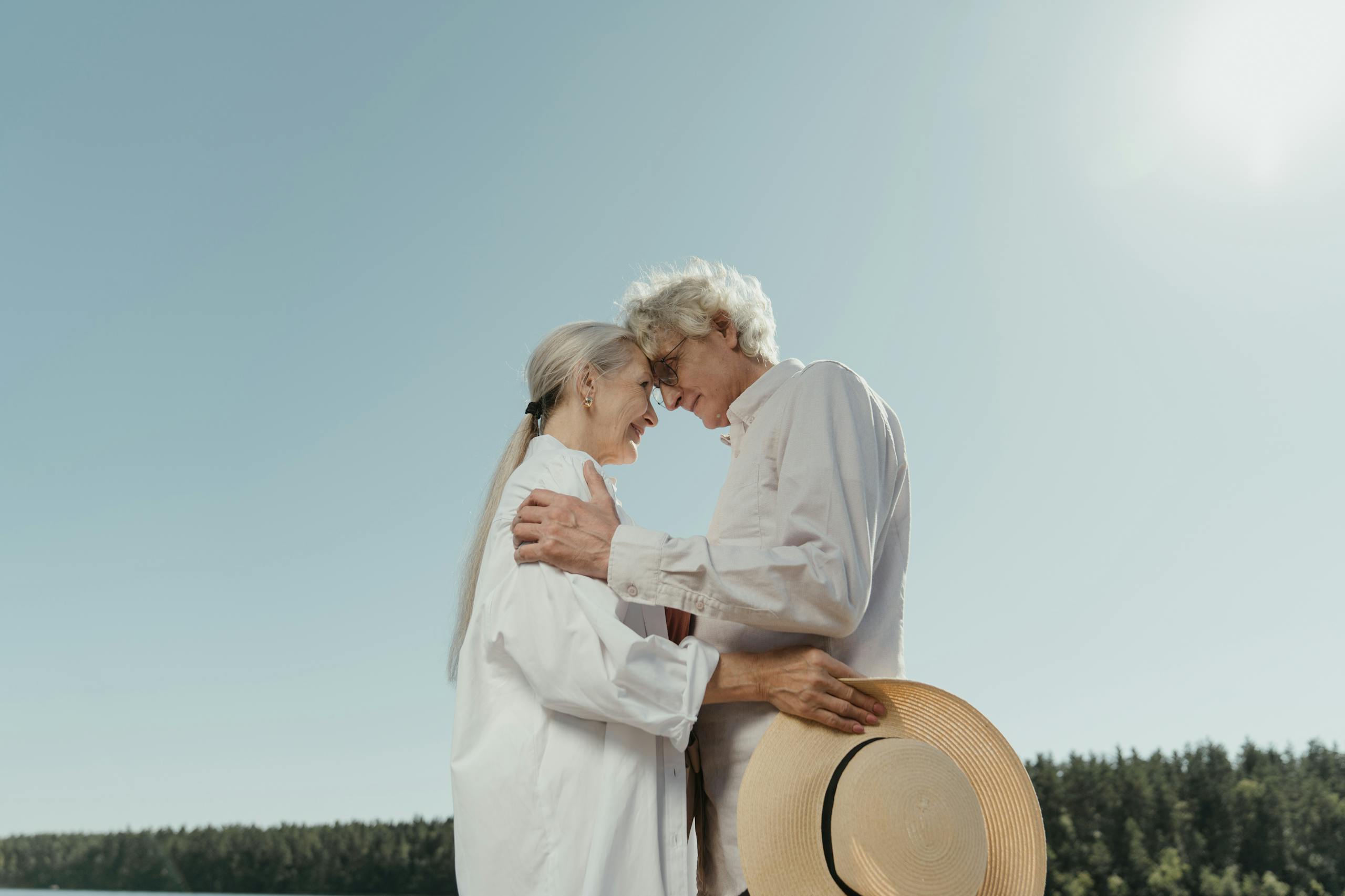
Reconnecting with an Old Flame: The Rise of Rekindled Romances in Later Life
There is a particular category of later-life love story that has become more common in the age of social media and search engines: the rekindled romance. Two people who loved each other at 22, or 30, or 38 — who lost each other to circumstance, geography, immaturity, or the demands of different lives — find their way back to each other at 58, or 67, or 74. And sometimes, what they find is that the feeling never fully disappeared.
Psychologist Nancy Kalish, who has studied rekindled romances for decades, found that reconnections between former partners have an unusually high success rate — higher than most other categories of relationship — particularly when the original relationship ended due to external circumstances rather than fundamental incompatibility. The people who find each other again are not starting from scratch. They are resuming something that was interrupted.
Why Rekindled Romances Are More Common Now
The internet has made finding people from your past trivially easy. A name in a Facebook search, a LinkedIn lookup, an alumni directory — what once required significant effort or luck now takes thirty seconds. Social media also allows people to maintain a low-level awareness of each other over decades without direct contact: you know, vaguely, that someone from your past is divorced, living in Denver, posting photos of their grandchildren.
This ambient awareness sometimes becomes something more. A class reunion prompts a reconnection. A condolence message after a mutual friend’s death turns into a conversation. A LinkedIn comment leads to coffee the next time you are both in the same city. The door that was closed for thirty years turns out to be unlocked.
What Makes Rekindled Romances Different
The distinctive quality of reconnecting with someone you loved before is the combination of the familiar and the new. You know this person — their humor, their warmth, the particular quality of their attention — in a way that is deeper than any first-date conversation could produce. But you are also meeting them as the people you have both become, and that person is genuinely different from the one you knew.
This duality can be intoxicating. It can also be disorienting. The feeling of coming home — which many people describe in rekindled romance — can cause you to project the past onto the present in ways that are inaccurate. The person you loved at 28 is not identical to the person in front of you at 62. Honoring both the continuity and the change is essential to navigating a rekindled relationship with clear eyes.
Navigating the Intensity
Rekindled romances are often characterized by unusually rapid emotional intensity — a sense of the relationship picking up where it left off, of time having been suspended. Kalish’s research found that this intensity can lead to faster commitment than might be wise, particularly when one or both parties are in transitional life circumstances (recently widowed, recently divorced, freshly retired).
The advice is the same as for any later-life relationship, but bears repeating with extra emphasis: give it time. The intensity is real, but it is not the same as compatibility over time. You need to see this person across different contexts, different moods, different circumstances. You need to find out not just whether you still love who they were, but whether you love who they are.
Practical Complications
Rekindled romances often face logistical challenges that fresh relationships do not: established lives in different cities, existing commitments to children and grandchildren, homes that neither party is eager to leave, financial structures that are decades in the making. These are real constraints. How you and a rekindled partner navigate them — with creativity and flexibility, or with rigidity and resentment — will tell you a great deal about whether the relationship has the practical foundation to last.
If You Are Considering Reaching Out
If you find yourself thinking about someone from your past — wondering whether they are well, whether the feeling was mutual, whether there is any point in making contact — a few honest questions are worth sitting with:
Why now? What has changed in your life or theirs that makes this feel like a meaningful moment? Is this genuine curiosity and care, or is it loneliness or nostalgia wearing the costume of something more substantial?
What do you actually want from the contact? A conversation, a reconnection, a relationship? Be honest with yourself about your intentions before you initiate contact, because you cannot fully control what happens once you do.
What do you know about their current circumstances? Reaching out to someone who is happily married, or recently bereaved, or otherwise in a situation where your contact would be unwelcome requires more sensitivity than reaching out to someone whose circumstances might welcome it.
If you decide to reach out, keep the first contact simple, warm, and low-pressure. You are opening a door, not walking through it. Give them room to respond — or not to — without obligation.
Sometimes the door opens onto something extraordinary. Sometimes it opens onto a warm, brief conversation and a better sense of closure. Both are worthwhile.
Related Articles
- Starting Over Together: What Blended Families Really Look Like After 50
- The Gift of Cultural Friendship: Why Connecting Across Cultures Changes You
- When Someone You Love Gets Sick: Health, Caregiving, and What It Does to Relationships
- Dating Again After 50: How to Re-enter the Relational World With Clarity and Confidence
[…] Reconnecting with an Old Flame: The Rise of Rekindled Romances in Later Life […]