





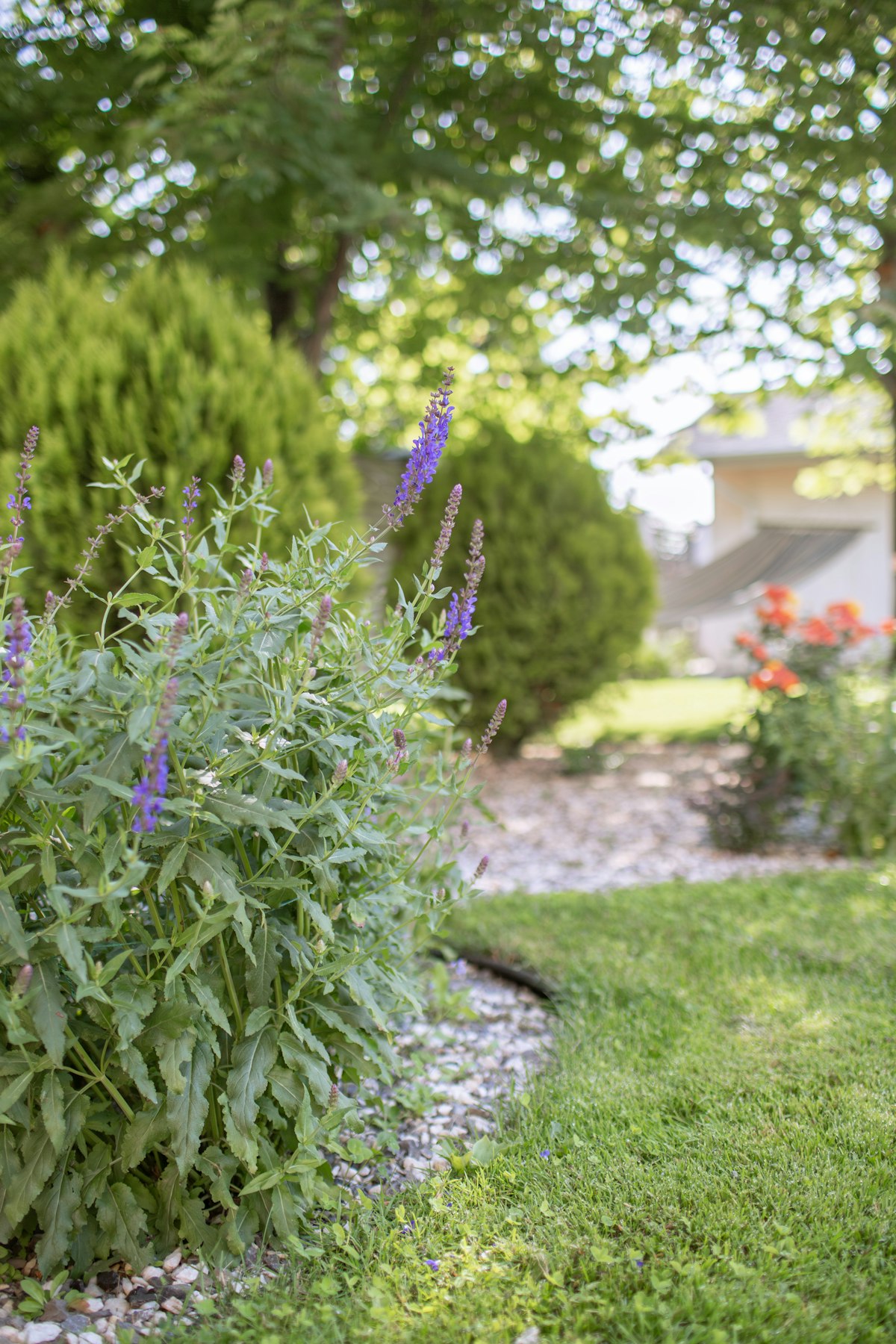
Low-Maintenance Landscaping: Reclaiming Your Weekends Without Losing Curb Appeal
The landscape that seemed manageable at 40 has a way of feeling like a full-time job at 55. What was an energetic Saturday hobby has become a weekly obligation that competes with everything else you’d rather be doing — and as the physical demands of maintaining a labor-intensive yard compound with age, many homeowners find themselves caught between a landscape they’re proud of and the growing cost of maintaining it, in time, money, and physical effort.
Low-maintenance landscaping is not a compromise. Done well, it is a deliberate redesign that reduces ongoing labor while often improving the year-round appearance of a property. The homeowners who think about it strategically tend to spend a year or two making targeted investments — better plants, smarter irrigation, hardscape additions — that permanently reduce the weekly maintenance burden rather than simply hiring more help to maintain the status quo.
The Labor Audit: Where Your Time Actually Goes
Before redesigning anything, it’s worth being precise about where the maintenance burden actually comes from. For most homeowners, the answer is a short list: lawn mowing (typically the single largest time consumer), edging, weeding garden beds, pruning shrubs that grow too large for their space, raking leaves, and seasonal tasks like mulching and fertilizing. Each of these has a structural solution — a change to the landscape design itself — that reduces the ongoing work more permanently than any service schedule or equipment upgrade.
Lawn area is almost always the primary driver of maintenance time. Grass requires mowing every 7–14 days during growing season, edging, fertilizing, watering in drought, and reseeding in bare patches. Reducing lawn area — replacing sections with ground cover, hardscape, native plantings, or mulched beds — is the single most effective landscape maintenance reduction strategy available. A homeowner who converts half their front lawn to a well-designed native garden or permeable paver area can cut outdoor maintenance time by 30–40% without touching the backyard at all.
Plant Selection as a Long-Term Labor Decision
Most landscape maintenance problems trace back to plant selection mistakes: shrubs planted in spaces too small for their mature size, which then require constant pruning to stay in bounds; annuals that require replanting every season; grass varieties that need frequent irrigation; plants that are not suited to the local climate and therefore constantly stressed, requiring intervention to survive.
Native plants — species indigenous to your region — are almost always the lowest-maintenance choice. They evolved in local conditions, require little to no supplemental irrigation once established, are naturally resistant to local pests and diseases, and often provide wildlife habitat value that non-native ornamentals don’t. The upfront investment in a native planting bed is typically higher than grass seed, but the ongoing maintenance cost is a fraction of the alternative. Many states and municipalities now offer rebates or incentives for homeowners who replace turf with water-wise native plantings.
Shrubs and perennials chosen specifically for “fit” — plants whose mature size matches the space they’re planted in — eliminate the most labor-intensive landscape task there is: constant pruning to keep things small. A shrub that naturally grows to four feet planted in a four-foot space is virtually maintenance-free. The same shrub planted under a window where it blocks the view requires intervention every few weeks through the growing season. Most landscape overcrowding problems are the result of plants purchased for their attractive small juvenile form with insufficient attention to what they become.
Irrigation: The Case for Smart Systems
Manual watering — standing with a hose, moving sprinklers, remembering to turn things on and off — is one of the first landscape tasks that homeowners over 50 identify as a chore they’d rather eliminate. Automated drip irrigation, combined with a smart controller that adjusts watering schedules based on weather data and soil moisture, virtually eliminates manual watering while using significantly less water than overhead sprinkler systems. For homeowners in drought-prone regions, a drip system can reduce outdoor water use by 30–50% while keeping plantings healthier — drip delivers water directly to root zones rather than evaporating from hot surfaces or running off impervious areas.
The installation cost of a basic drip system for a garden bed or landscaped area is typically $500–$2,000 depending on scope — a one-time investment that pays for itself in reduced water bills and recovered time within two to three seasons in most markets.
Hardscape as a Maintenance Reduction Tool
Patios, pathways, gravel beds, and permeable pavers require essentially no ongoing maintenance beyond occasional sweeping and spot weeding. Replacing lawn areas or high-maintenance garden beds with well-designed hardscape can dramatically reduce the weekly burden while adding usable outdoor living space — a trade that most homeowners find entirely favorable. The appeal of a well-designed patio or courtyard is not just functional but aesthetic: hardscape adds architectural interest and structure to a landscape in ways that undifferentiated lawn does not.
The key to hardscape that doesn’t create its own problems is managing drainage carefully. Hardscape that sheds water toward the foundation or creates pooling in low areas can worsen the water management problems that many older homes already have. A landscape designer or experienced contractor can assess drainage implications before installation — a step worth taking before committing to significant paving.
Related Articles
- The Travel Habit: How to Make Short Getaways a Regular Part of Your Life
- Situationships After 50: What They Are, Why They’re Growing, and How to Navigate One Honestly
- Reconnecting with an Old Flame: The Rise of Rekindled Romances in Later Life
- Do You Know Your Retirement Number? How to Calculate What You Actually Need