
Aging in Place: How to Modify Your Home for Long-Term Comfort and Safety

Aging in place — the ability to live in your own home safely, independently, and comfortably as you age — is the stated preference of more than 75% of Americans over 50, according to AARP research. The gap between that preference and most homes’ actual capacity to support it is significant. The typical American home was not designed with aging in place in mind: it features stairs between floors, narrow doorways that cannot accommodate mobility devices, bathrooms designed for agility rather than safety, and entry points that assume unimpaired balance and step clearance.
The good news is that most homes can be modified to support aging in place at reasonable cost — and that the modifications that matter most are far less expensive and intrusive than a complete renovation. The key is identifying the right modifications at the right time, rather than waiting for a fall or a mobility crisis to prompt emergency adaptation.
The Most Important Modifications: Bathrooms First
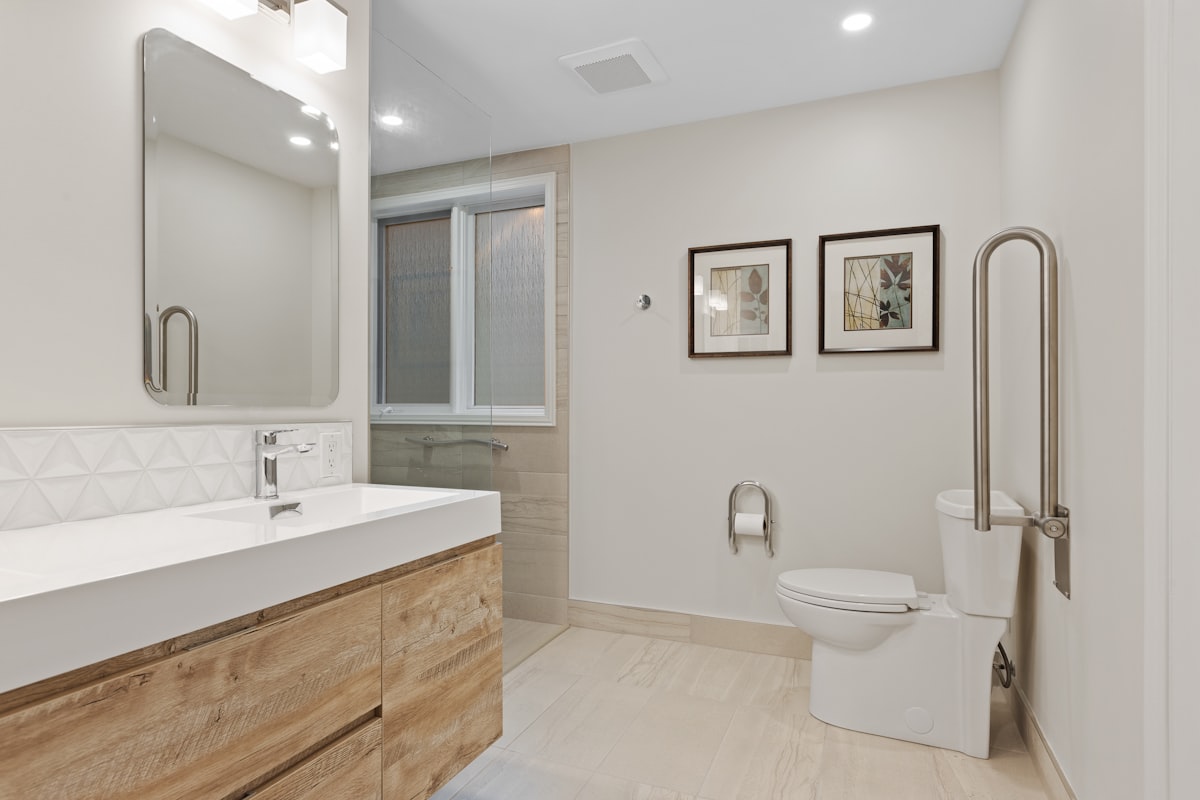
Falls are the leading cause of injury-related death among Americans over 65, and the bathroom is the highest-risk room in the home. The modifications with the best safety-to-cost ratio are bathroom-focused: grab bars in the shower and next to the toilet ($200–$600 professionally installed), a walk-in shower with a low or no threshold ($3,000–$12,000 depending on scope), a comfort-height toilet ($300–$600 installed), and non-slip flooring or bath mats throughout the bathroom. These modifications can be completed for $3,500–$15,000 and represent the highest-leverage aging-in-place investment available for most homeowners.
A curbless shower — a shower with no lip or threshold, wide enough to accommodate a shower chair or eventually a wheelchair if needed — is the single most recommended bathroom modification for homeowners over 50. It is safer than a traditional shower for people at any mobility level, more comfortable, and significantly more aesthetically appealing than the institutional grab bars and shower chairs that many people envision. Modern curbless shower designs are indistinguishable from high-end contemporary renovations.
First-Floor Living Capability
The ability to live on the first floor of a home — with a bedroom and full bathroom accessible without stairs — is the structural modification that has the greatest long-term impact on aging-in-place feasibility. Many older American homes were designed with all bedrooms on the second floor; creating a first-floor bedroom, or converting an existing first-floor room to serve that purpose, may require only the addition of a bathroom or half-bath conversion.
If your home has no first-floor bathroom, adding one is among the most valuable aging-in-place investments you can make — both for your own future use and for the home’s resale value. A first-floor full bath addition costs $15,000–$40,000 depending on scope and location; a half-bath conversion of an existing closet or space costs $5,000–$15,000. The time to make this investment is before you need it, not after a health event makes the urgency acute.
Entry and Accessibility Modifications
Zero-step entries — the ability to enter your home without climbing steps — are a fundamental accessibility requirement for wheelchair users and people with significant mobility limitations. For homes with front steps, options include: a ramp (temporary or permanent, $1,500–$5,000), a vertical platform lift ($3,000–$8,000), or landscaping/grading modifications that redirect entry to a level portion of the property. Wider doorways (minimum 32 inches clear, 36 inches preferred for wheelchair access) are a more involved modification ($500–$2,000 per doorway) but significantly expand the long-term livability of a home for people with mobility devices.
Lever-style door handles replace round knobs — difficult to operate with arthritis or reduced hand strength — at $50–$150 per door. Keypad or smart lock entry eliminates the need to manage physical keys for people with hand dexterity limitations. These are low-cost modifications with immediate quality-of-life impact.
Lighting and Vision
Vision changes with age in ways that have direct home safety implications. The aging eye requires more light to see clearly, takes longer to adjust between light and dark environments, and is more sensitive to glare. Upgrading lighting throughout the home — particularly in stairways, hallways, and bathrooms — with higher-lumen, diffused LED fixtures is an inexpensive modification ($50–$200 per fixture installed) with significant safety impact. Motion-activated night lighting in hallways and bathrooms eliminates the hazardous transition from dark bedroom to lit bathroom in the middle of the night, which is the context for a disproportionate number of older adult falls.
Planning and Funding
A certified aging-in-place specialist (CAPS) — a contractor or designer certified by NAHB — can assess your home and provide a prioritized modification plan tailored to your specific needs and home layout. This assessment ($200–$500) is a worthwhile investment before undertaking significant modification spending, as it provides expert prioritization of which modifications will have the greatest impact for your specific circumstances.
Funding options for aging-in-place modifications include: FHA Title 1 home improvement loans, HUD’s Home Repair and Rehabilitation program for qualifying homeowners, state-level programs for low-to-moderate income older homeowners (the federal Older Americans Act provides funding for some states’ programs), and USDA Rural Development loans for qualifying rural homeowners. A home equity line of credit or cash-out refinance provides access to home equity for owners with substantial equity who don’t qualify for assistance programs.