





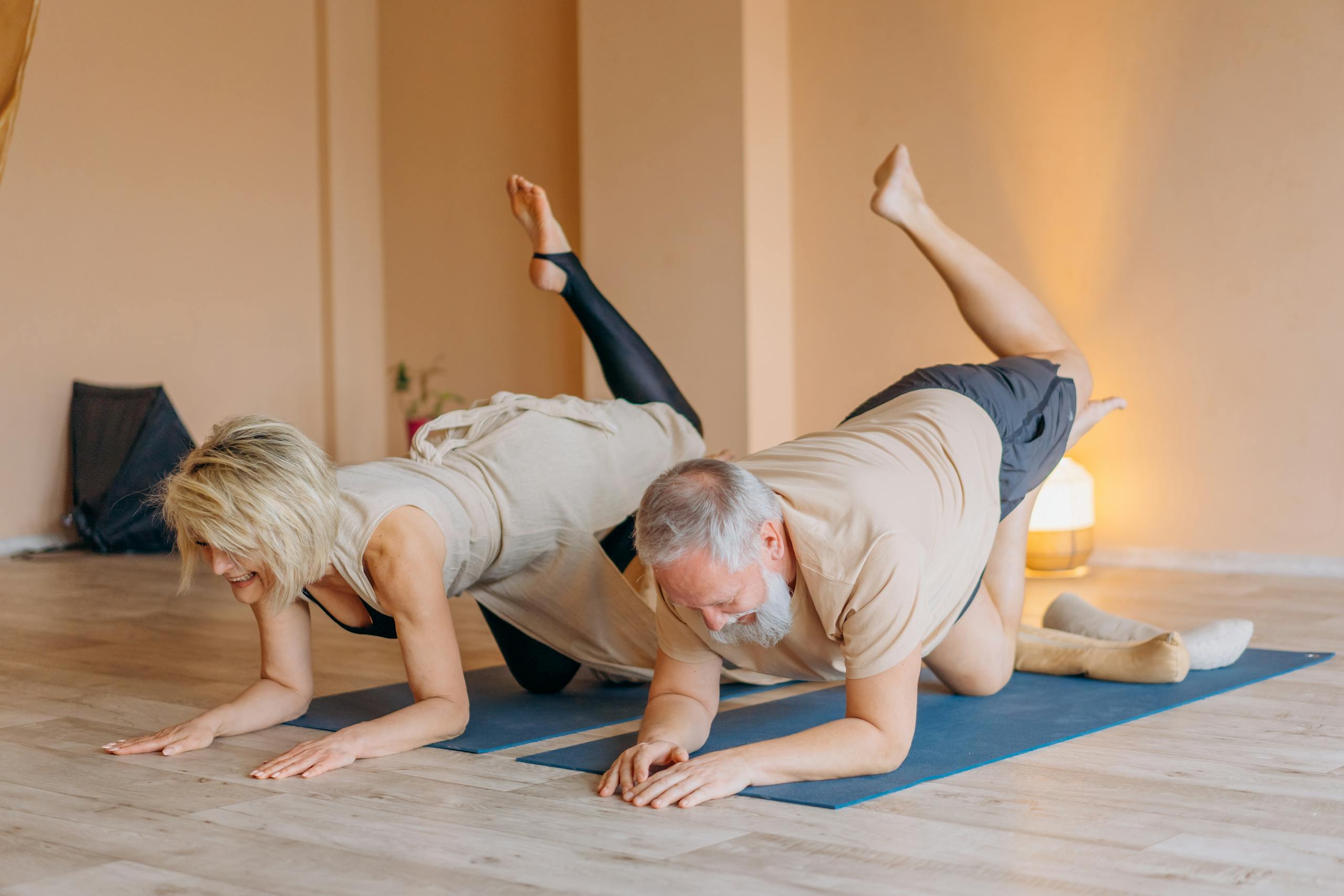
Yoga for Beginners: How to Start a Home Practice with Confidence
Yoga has a reputation that intimidates many beginners: flexible people in impossible poses, specialized studios with their own vocabulary, a culture that can feel exclusive. All of that is the surface. Beneath it is one of the most accessible, adaptable, and well-researched practices for physical and mental health — available to literally any body, at any fitness level, with no equipment required.
This guide gives beginners everything they need to start a home practice confidently.
Why Yoga Is for Every Body
The most important thing to understand about yoga is that it meets you where you are. The images of advanced yogis in complex postures represent years of practice, not a prerequisite for starting. Every pose in yoga has modifications for beginners, and many experienced practitioners still use modifications regularly.
The research on yoga’s benefits includes:
- Reduced anxiety and depression symptoms
- Improved flexibility, balance, and joint health
- Lower blood pressure and resting heart rate
- Reduced chronic pain (particularly back pain)
- Improved sleep quality
- Better stress management
- Enhanced body awareness and proprioception
These benefits accrue at beginner levels of practice, not only advanced ones.
Types of Yoga and Which to Start With
Hatha Yoga: General term for physical yoga practice; classes described as “hatha” are typically slow-paced and suitable for beginners. A good starting point.
Vinyasa / Flow Yoga: Sequences where poses flow together with breath. Moderate intensity, widely taught. Good for beginners in a more structured class environment.
Yin Yoga: Slow, passive poses held for 3–5 minutes targeting connective tissue and fascia. Excellent for flexibility, stress relief, and recovery. Very accessible.
Restorative Yoga: Deeply passive poses with prop support. Almost purely relaxation. Excellent for stress, anxiety, and recovery. No strength or flexibility required.
Ashtanga Yoga: Vigorous, structured series. Not recommended as a starting point — better after establishing a foundation.
Hot Yoga / Bikram: Yoga in a heated room (95–105°F). Not for beginners without experience — dehydration and heat stress are risks.
Best starting recommendation: Yin yoga for flexibility and stress relief; Hatha for a balanced introduction to yoga fundamentals.
Equipment You Actually Need
Yoga mat: Non-negotiable. A basic mat ($15–$30) is perfectly adequate to start. For more sustained practice, upgrading to a mat with better grip and cushioning ($40–$80) is worthwhile.
Optional but helpful:
- Two yoga blocks ($15–$25 for a pair) — used to modify poses when flexibility is limited
- A strap ($10–$15) — helps reach poses without overextending
- A blanket — for warmth in final relaxation and as padding under knees
That’s the complete equipment list. Everything else — specialty clothes, towels, yoga wheels — is optional and can come later if you continue practicing.
Key Poses for Beginners
Mountain Pose (Tadasana): Standing upright, feet hip-width, arms at sides. Foundational standing posture — teaches alignment and grounding.
Child’s Pose (Balasana): Knees on floor, hips toward heels, arms extended or at sides, forehead to mat. A resting pose you can return to at any time during practice.
Cat-Cow (Marjaryasana-Bitilasana): On hands and knees, alternating between arching and rounding the spine with breath. Excellent spinal mobility and warm-up.
Downward-Facing Dog (Adho Mukha Svanasana): Inverted V-shape; hands and feet on floor, hips up. Stretches hamstrings, calves, and shoulders; strengthens arms and core.
Warrior I (Virabhadrasana I): Lunge with back foot flat, arms overhead. Builds leg strength and hip flexibility.
Seated Forward Fold (Paschimottanasana): Seated with legs extended, fold forward from hips. Hamstring and lower back stretch.
Legs Up the Wall (Viparita Karani): Lying on back, legs resting vertically against wall. Deeply restorative; reduces leg fatigue and calms the nervous system.
Savasana (Corpse Pose): Lying flat on back at the end of practice. The most important pose — allows the body to integrate the practice.
Breathing: The Foundation of Yoga
The breath is what connects yoga to the nervous system. Ujjayi breathing (slow, audible breath through the nose with a slight constriction at the back of the throat — often described as “ocean breath”) is the standard breathing technique in most yoga styles. It maintains focus, regulates pace, and activates the parasympathetic nervous system.
The basic principle: inhale through the nose on expansion movements (opening the chest, rising); exhale through the nose on compression or folding movements. Let the breath guide the movement rather than forcing movement and adjusting breath afterward.
Building a 20-Minute Daily Practice
Consistency beats duration for building a yoga practice. 20 minutes daily produces more benefit and faster progress than 90 minutes once a week.
A simple daily sequence: 5-minute warm-up (cat-cow, child’s pose) → 10 minutes of standing and seated poses → 5-minute savasana or legs up the wall. As practice develops, naturally expand and explore.
Free Resources and Apps
- Yoga with Adriene (YouTube): The gold standard for free beginner yoga content — friendly, accessible, extensively categorized
- Down Dog app: Customizable yoga sessions at any level; highly rated
- Find What Feels Good (FWFG): Adriene Mishler’s membership platform for deeper practice
[…] challenging. If you’re looking for a low-impact starting point, consider our guide on Yoga for Beginners, which requires minimal […]
[…] Yoga for Beginners: How to Start a Home Practice with Confidence […]
[…] Yoga for Beginners: How to Start a Home Practice with Confidence […]