





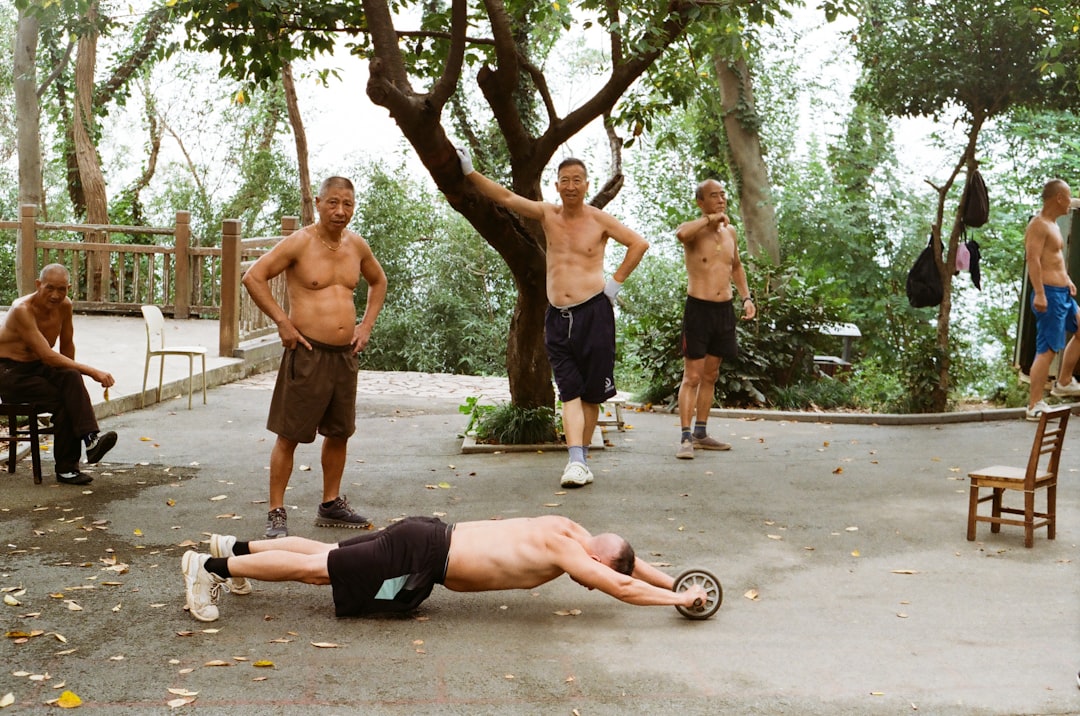
This is also the decade where most people either build a durable fitness baseline that carries them into their 70s and 80s, or drift into a quiet slow decline they later wish they hadn’t. Which one happens is rarely a matter of willpower. It is a matter of which small, consistent habits get installed.
The real fundamentals — unglamorous
The wellness industry produces a lot of sophisticated-sounding advice. The actual fundamentals that genuinely move the needle at this stage are embarrassingly ordinary and mostly free.
- Sleep — 7 to 8 hours, most nights, with consistent timing.
- Movement — 150+ minutes a week of moderate activity, plus resistance training 2–3 times a week.
- Strength — specifically maintaining muscle mass, which is the single biggest predictor of physical independence after 70.
- Nutrition — enough protein (often under-eaten by this age group), adequate fibre, minimal ultra-processed food. Not a diet — a pattern.
- Stress — chronic low-grade stress erodes everything else, and addressing it often does more than any supplement.
- Social connection — well-evidenced as a predictor of cognitive and physical health, not peripheral.
Strength — the one most people under-do
Of the fundamentals, strength training is the one that most professionals in this age group under-prioritise and most under-estimate the importance of. Muscle mass naturally declines with age — a process called sarcopenia — and the rate of decline steepens after 60 unless actively resisted.
Two to three resistance sessions a week, focused on the large compound movements (squats, deadlifts, presses, rows, and their variants), is the most efficient intervention. The time commitment is modest — 90 to 150 minutes a week. The effect on independence, mobility, and metabolic health over the next 20 years is difficult to overstate.
The most common obstacle is not lack of gym — plenty of people train effectively with basic equipment at home. It is the persistent cultural framing of strength training as optional or cosmetic at this age. It isn’t.
Sleep — the one most worth protecting
Sleep becomes both more important and often harder in this decade. Hormonal shifts, stress, and lifestyle accumulation can erode the easy 8-hour nights of earlier decades. The response is not to accept reduced sleep — it is to protect the conditions that make good sleep possible.
The interventions that work are well-studied and unsexy. Consistent sleep and wake times. A cool, dark room. Minimal alcohol, especially in the evening. Minimal caffeine after midday. Exposure to daylight in the morning. Reduction of late-evening screen time. Handling stress before bed, not in bed. None of this is revelation. All of it matters.
The medical side — actually engage with it
A mistake many 50+ professionals make is treating medical care as a reactive rather than proactive category. Basic screenings, lipid panels, blood pressure, glucose, and age-appropriate cancer screens catch a large portion of the serious conditions at this age while they are still fixable. Avoiding them does not prevent the conditions. It just delays their detection.
Engaged, unsentimental use of good primary care — regular, proactive, not only when something is wrong — is one of the highest-ROI habits of this decade.
Consistency over intensity
A final note. The people who seem to age best are almost never the ones doing extreme things. They are the ones doing ordinary things consistently over decades. The dramatic six-week programme rarely matters. The unglamorous 20-year pattern almost always does.
This is actually good news. You do not need to become a different person. You need to make small, ordinary practices stable — and let the compounding do the work.
Health in midlife is rarely a knowledge problem. It’s usually a consistency problem. Coaching is one of the most effective ways to turn what you already know into what you actually do.
[…] Health and Energy Over 50: The Quiet Fundamentals […]
[…] Health and Energy Over 50: The Quiet Fundamentals […]
[…] Health and Energy Over 50: The Quiet Fundamentals […]
[…] Health and Energy Over 50: The Quiet Fundamentals […]
[…] Health and Energy Over 50: The Quiet Fundamentals […]